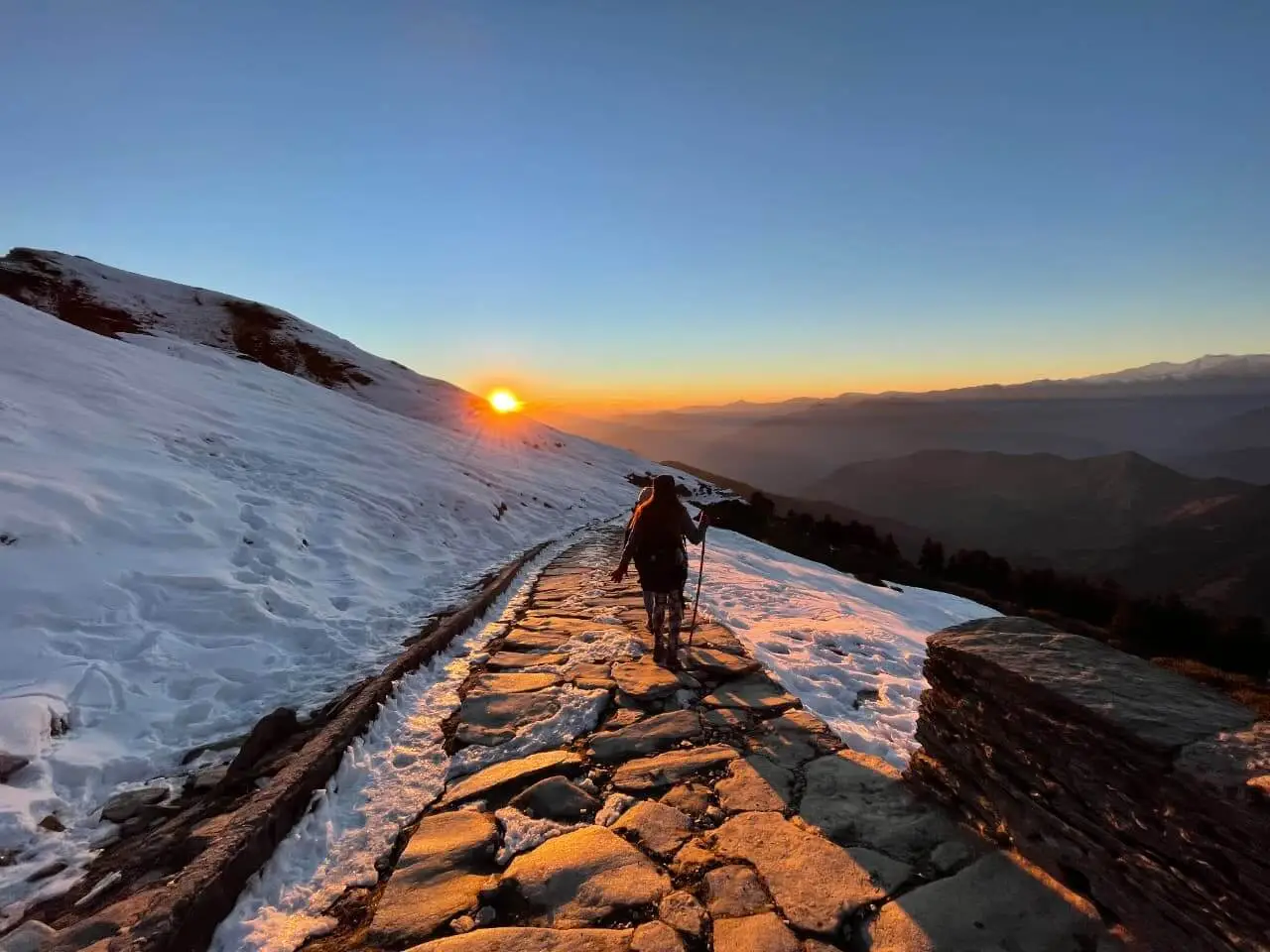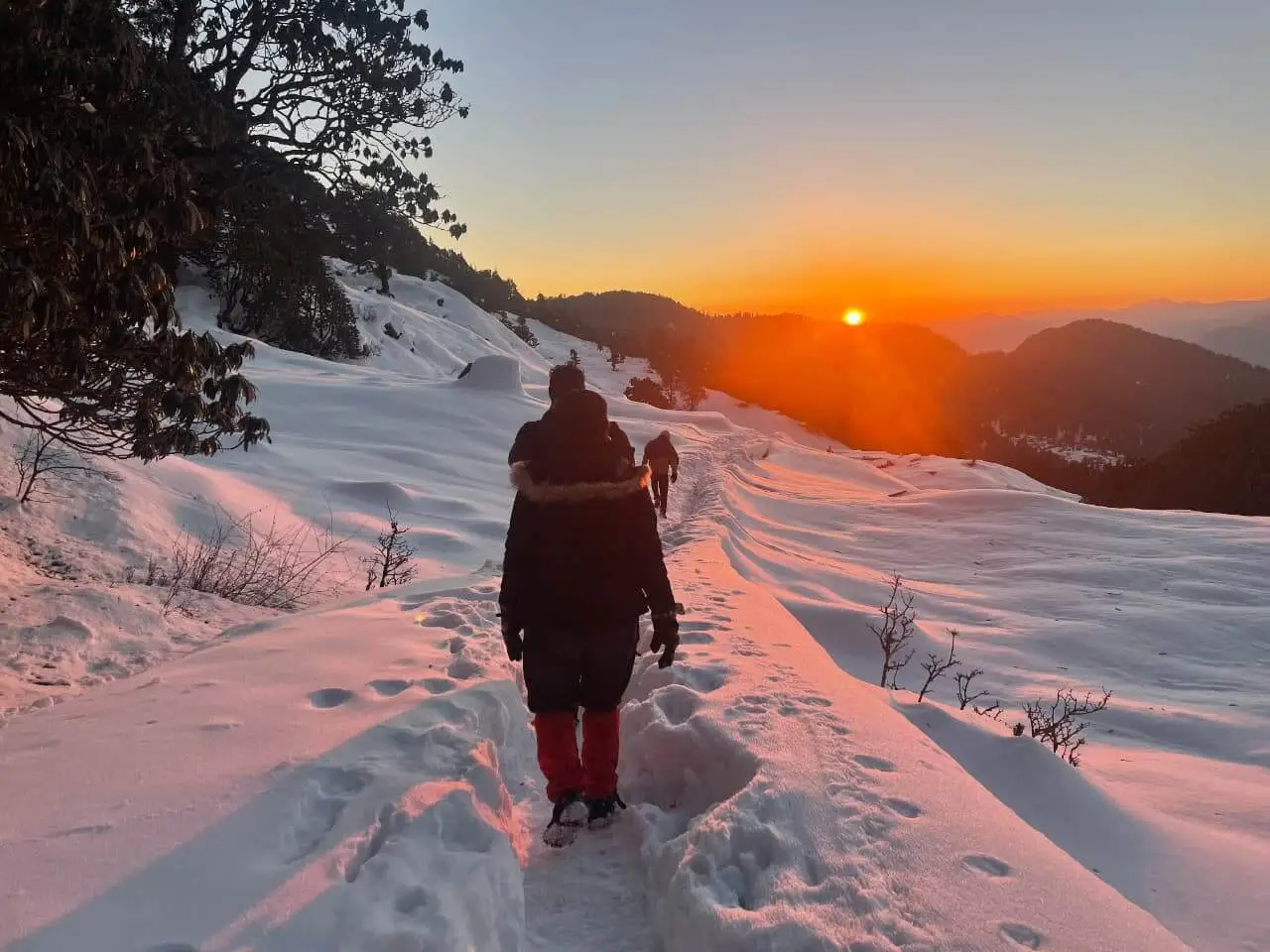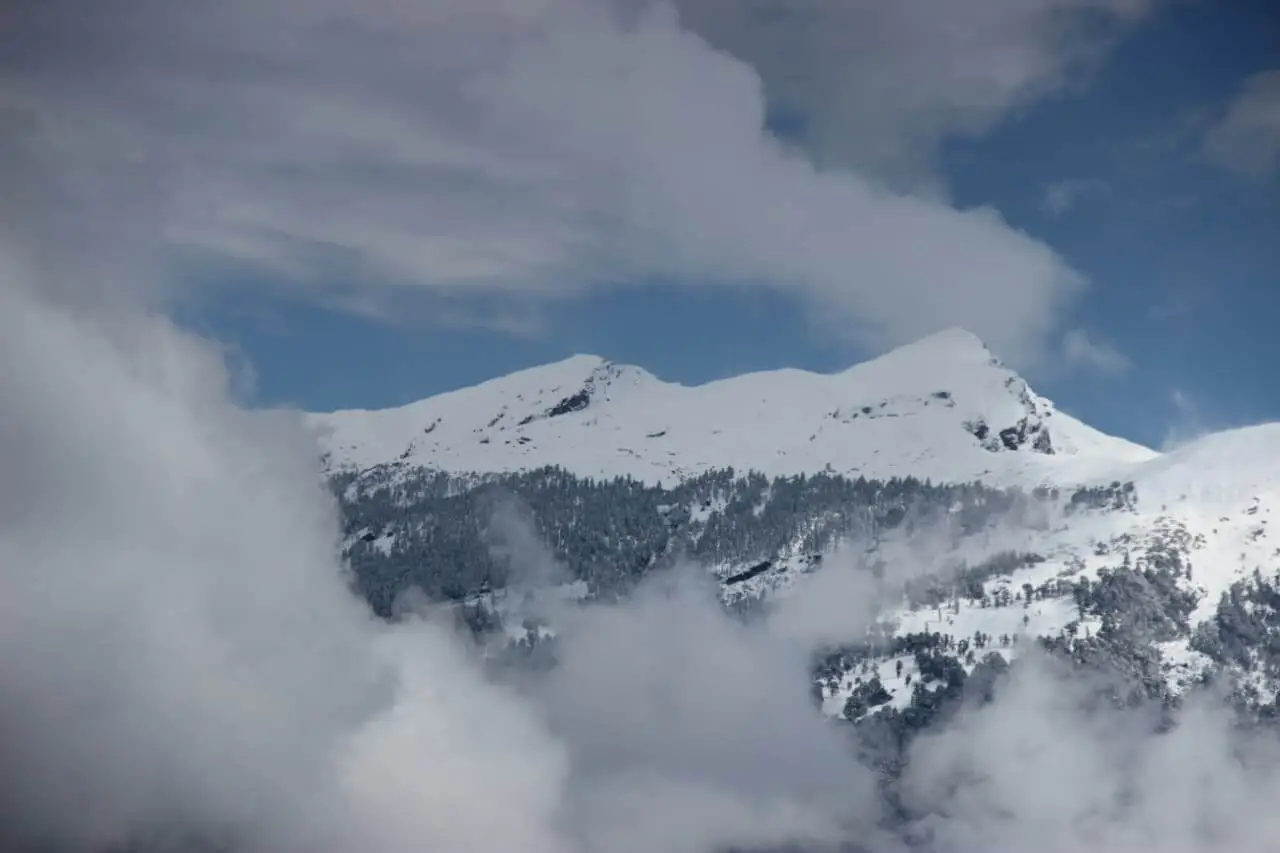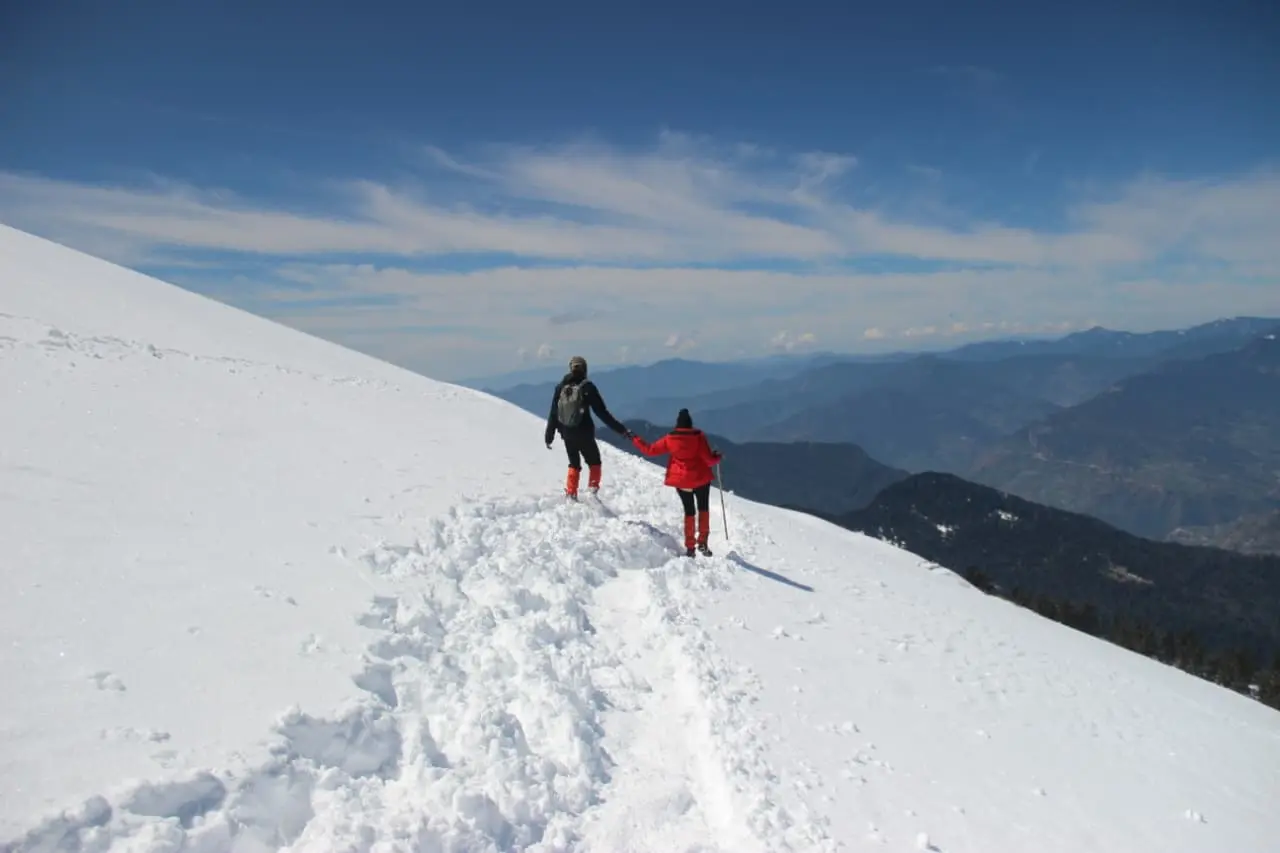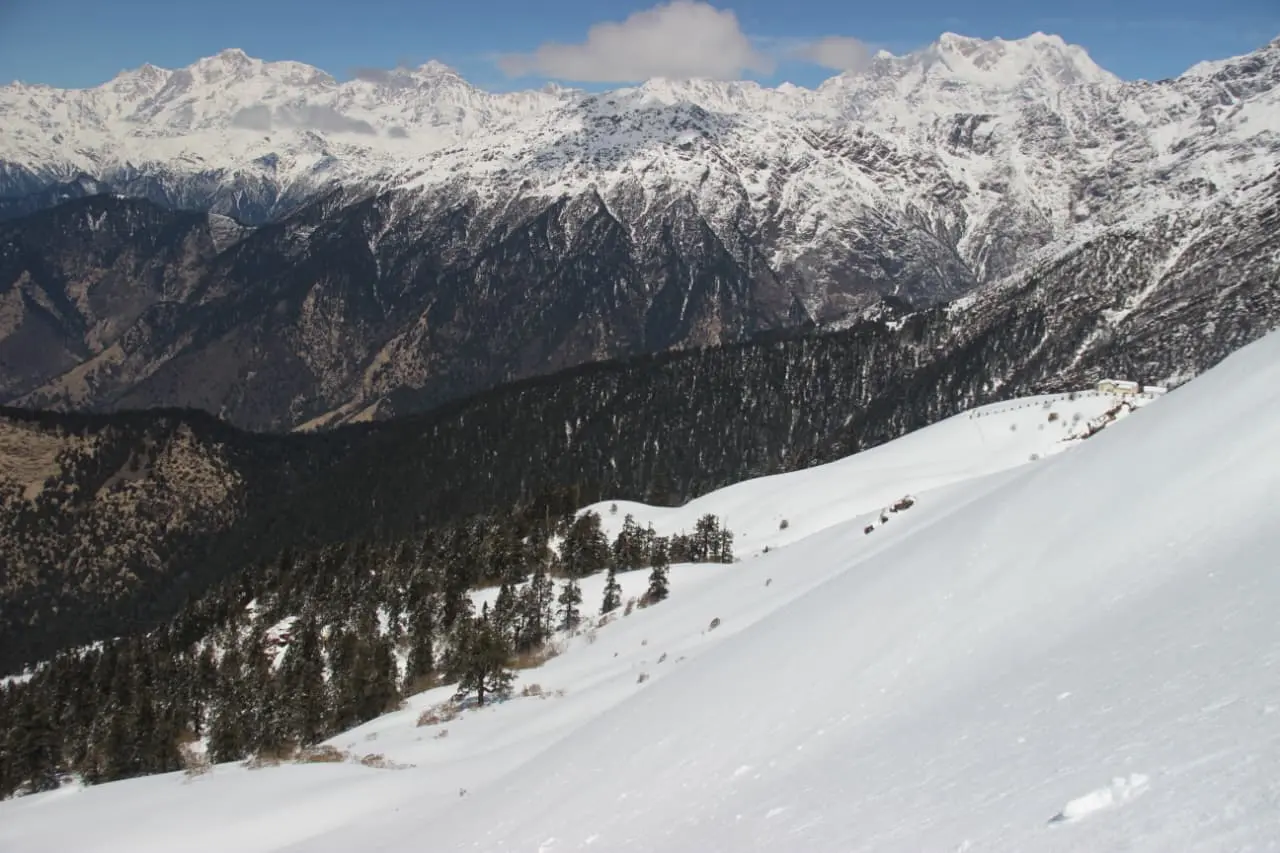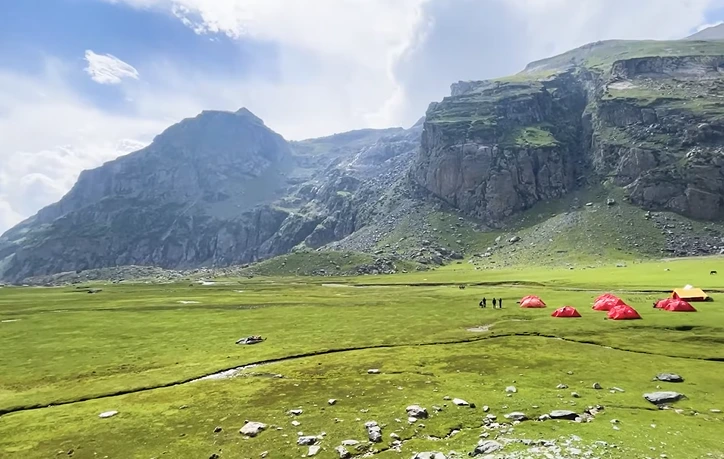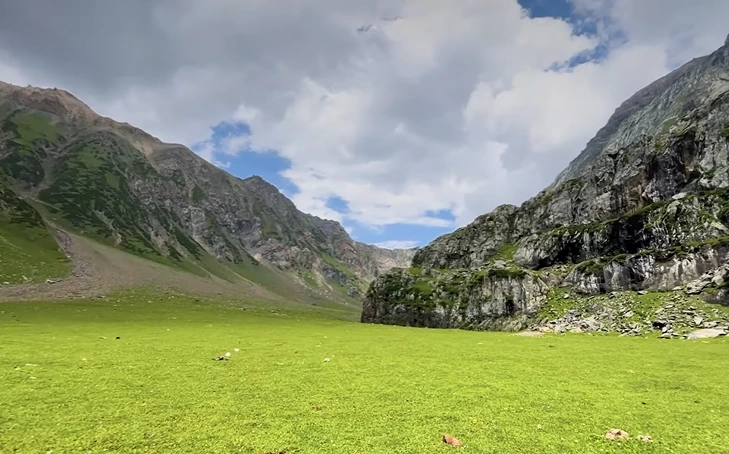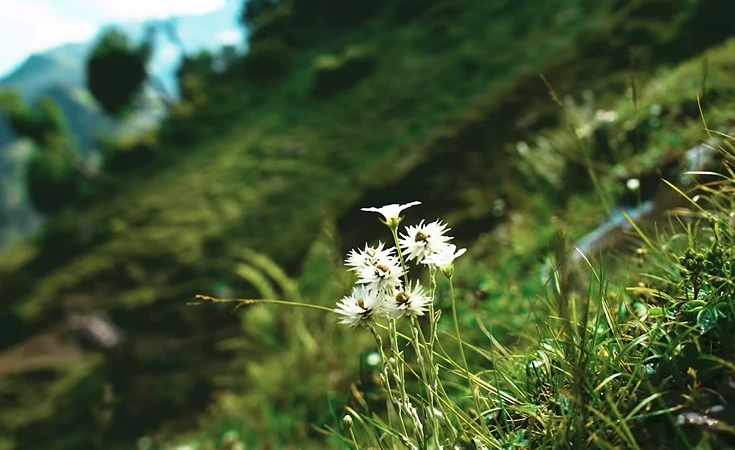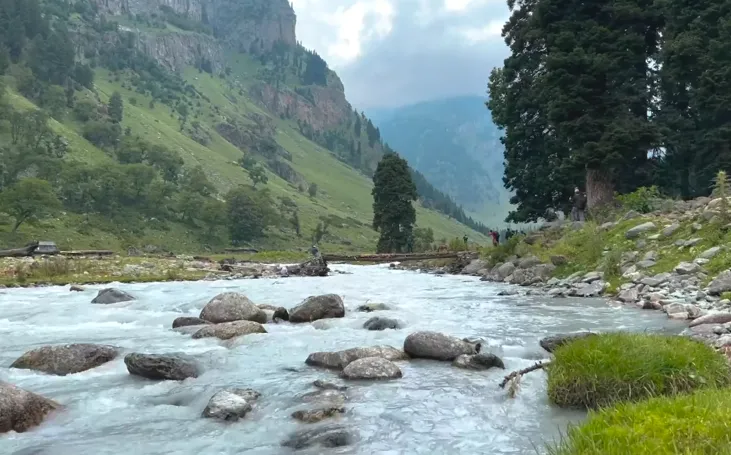
There’s a moment, somewhere on the trail above Raithal, when the forest goes quiet before it gets loud again. The birds stop. The wind changes its mind about which way it wants to blow. Then, from behind Bandarpoonch, a soft grey curtain rolls in over the ridgeline, and the first fat drop lands on a rhododendron leaf with a sound like a tiny drum being tapped for the first time. That’s how the party always starts on the Dayara Bugyal trek. Quietly. Almost shyly. And then it doesn’t stop until the whole meadow is dancing.
Most people plan their Dayara Bugyal trek around winter snow or autumn clarity, and fair enough — both are stunning. But almost nobody talks about this meadow in the rain, and honestly, that’s a bit of an injustice. Because the rain is when Dayara Bugyal stops being scenery and starts being alive.
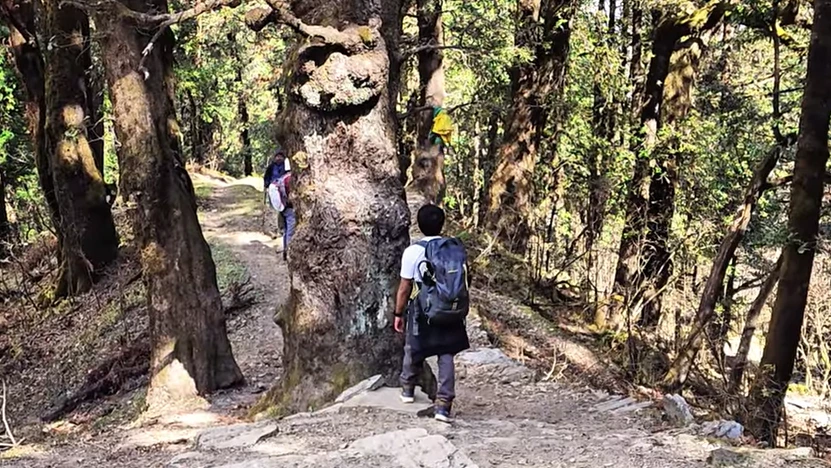
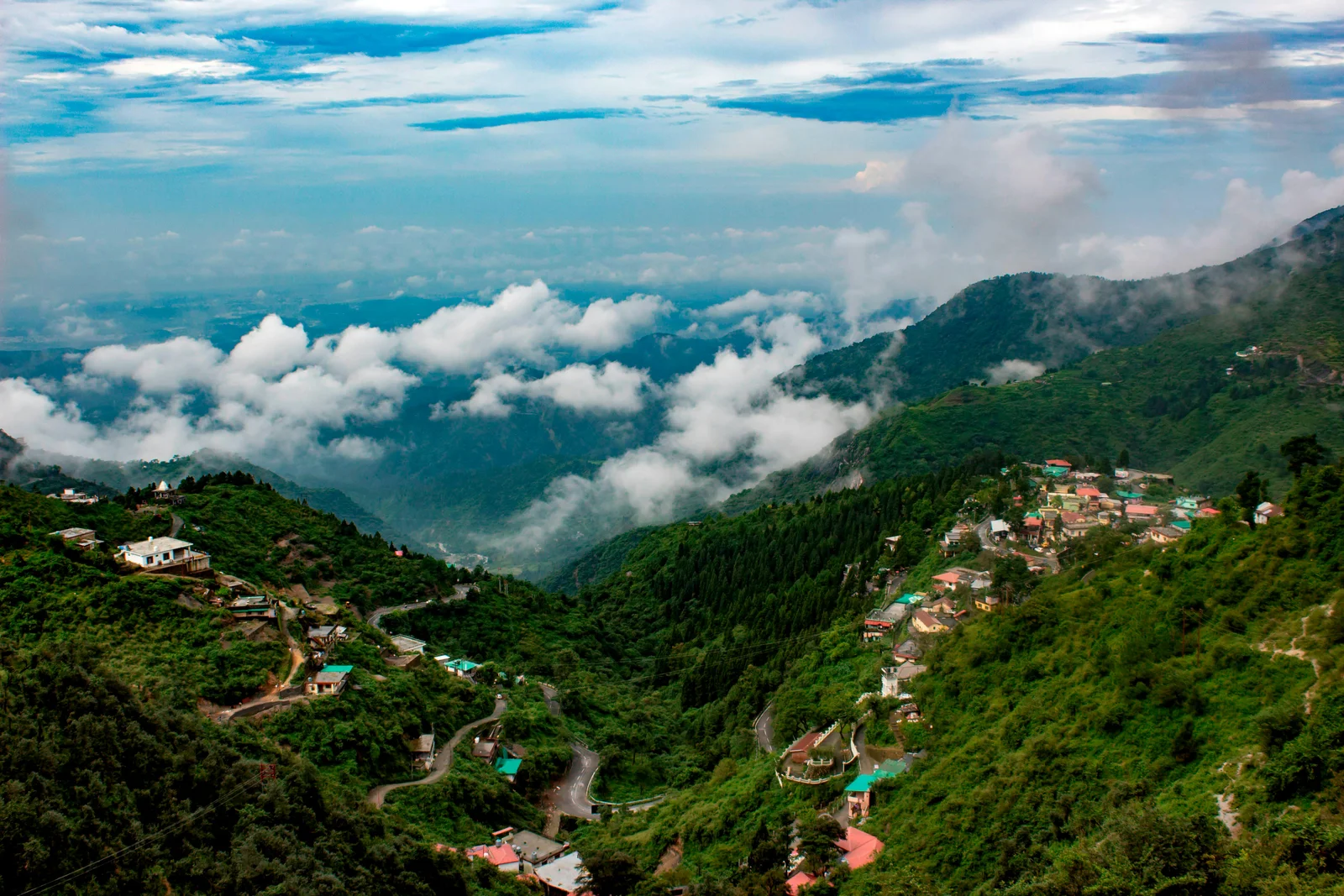
A Dayara Bugyal trek begins at Raithal — a small Garhwali village stitched together with wooden houses, narrow lanes, and the smell of woodsmoke drifting out of kitchen windows. From here the trail climbs gently through oak and maple forest, and on a clear day, that climb is a quiet one. Boots on dry leaves. Sunlight slipped through gaps in the canopy. The odd call of a Himalayan bird somewhere you can’t quite see.
On a rain day, though, the same forest turns into something closer to an orchestra. Every leaf becomes its own little instrument — the broad oak leaves playing something deep and slow, the smaller rhododendron leaves answering quick and bright, almost like laughter. Walk under that canopy during a light Himalayan shower and you’ll hear the forest breathing, properly breathing, in with the wind and out with the rain sliding off a thousand leaves at once.
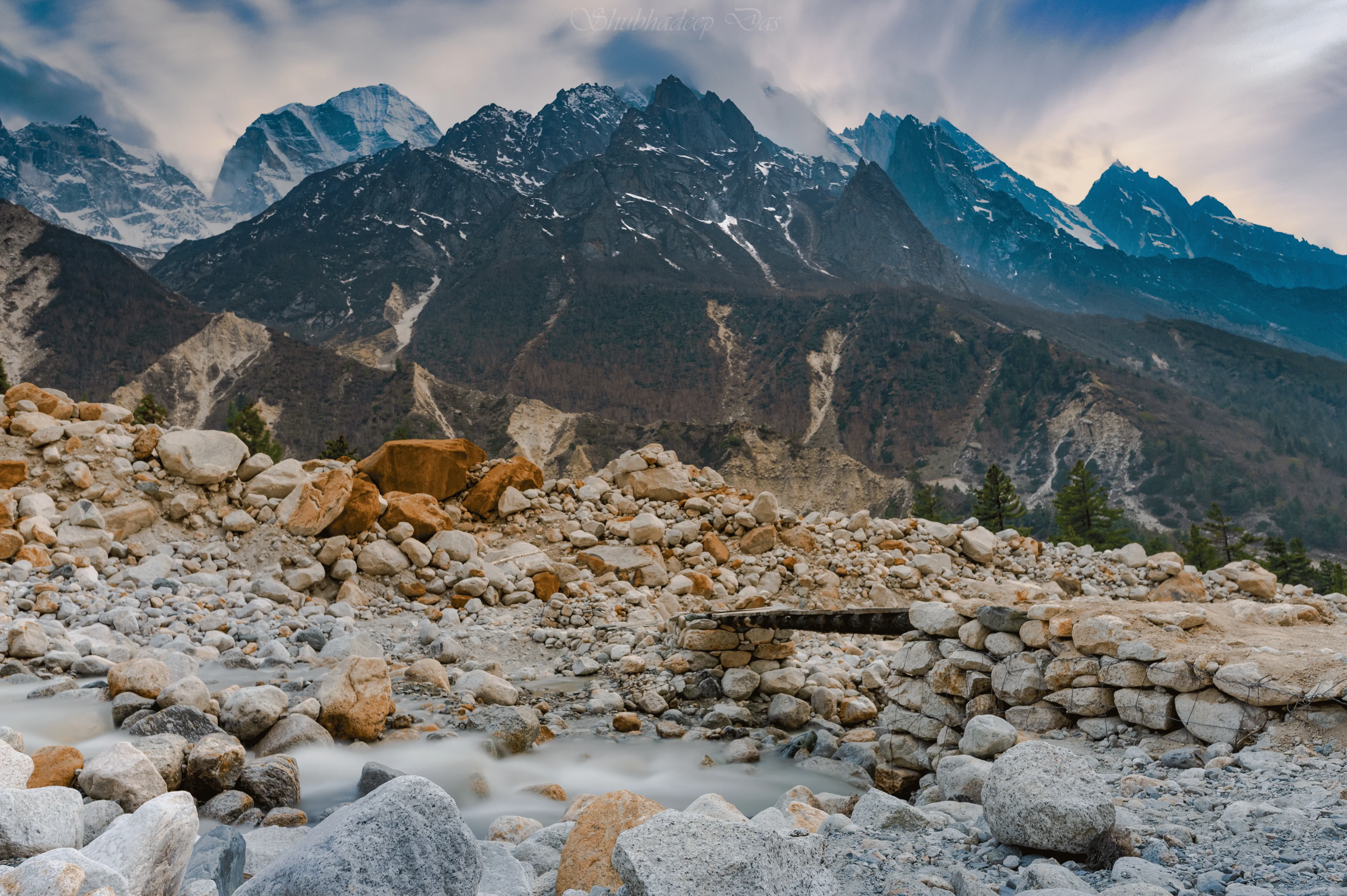
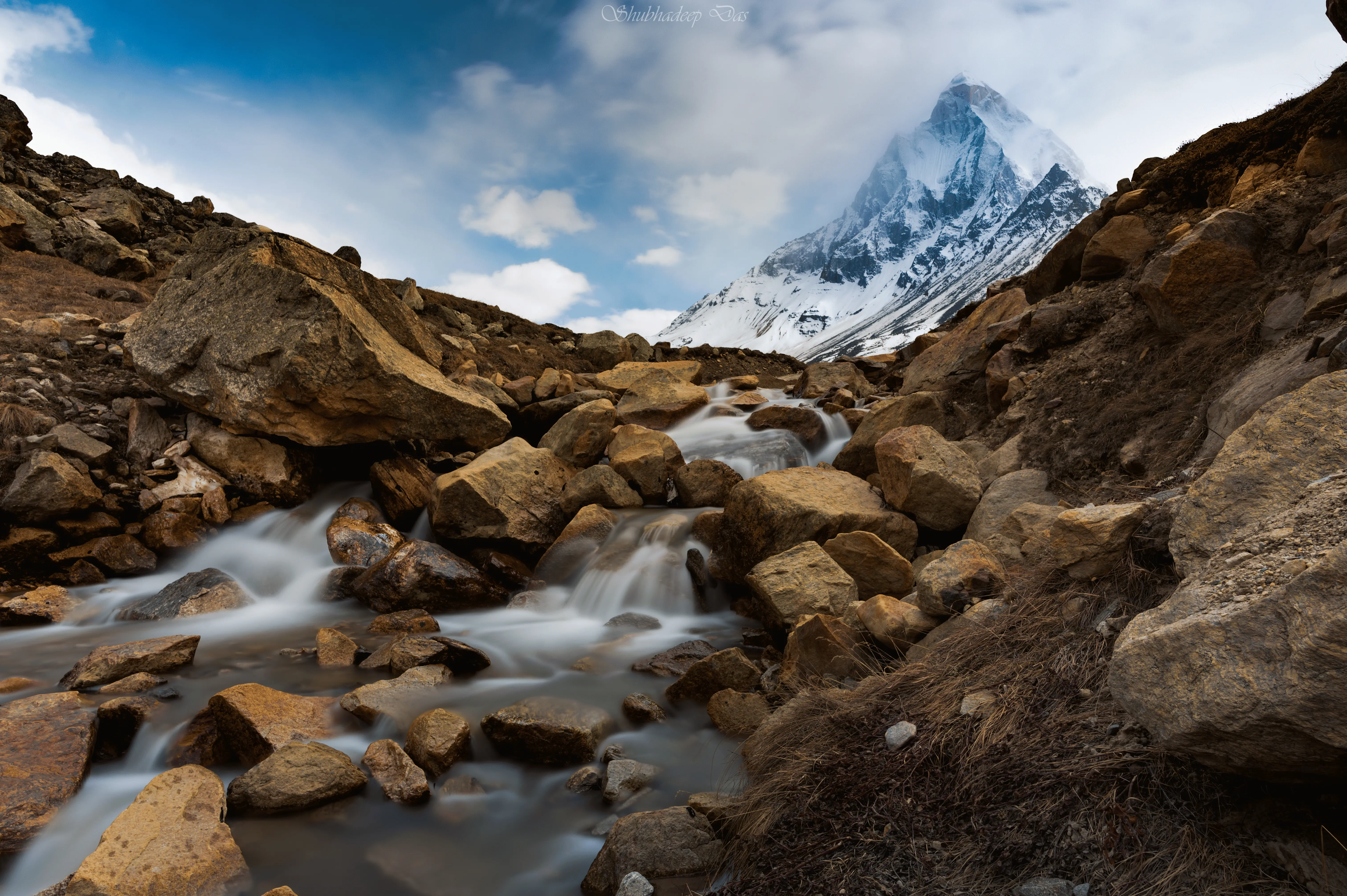
Even the trail changes its mood. Stones that were dusty an hour ago turn a deep, polished brown. Moss you’d have walked straight past on a dry day suddenly glows a strange, almost electric green. Streams that were thin trickles last week fill out and start talking — not loudly, just enough to keep you company on the climb up to Gui.
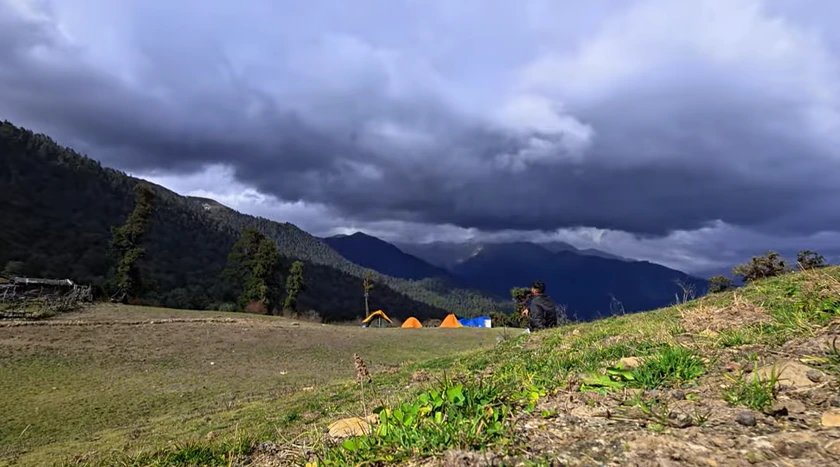
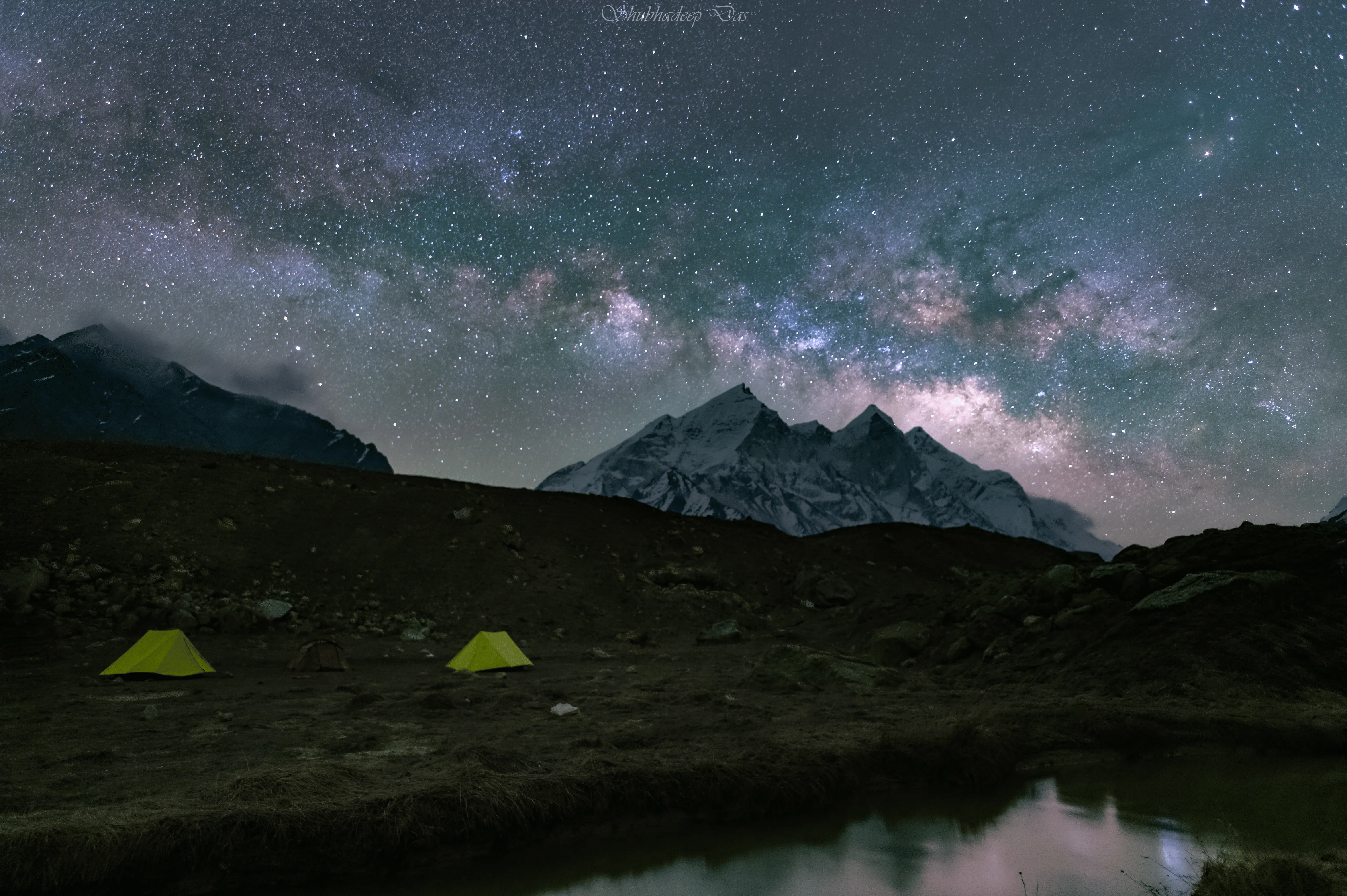
Gui sits just below the tree line and works as the main campsite on the way to the meadow, and this is really where the rain party sends out its invitations. Clouds here don’t drift overhead the way they do down in the plains. They walk straight through camp at eye level, like uninvited guests who somehow already feel welcome.
One minute the tents are sitting in neat rows against dark green slopes. The next, that whole view is gone, swallowed by a slow-moving wall of white mist that smells faintly of wet pine. Then it lifts again, and there’s Bandarpoonch, looking freshly rinsed, its snow somehow brighter than before. This happens over and over through the evening — cloud, rain, clearing, cloud, rain, clearing — as if the mountains can’t decide whether to keep the view a secret or show off a little.
Evenings at Gui during a shower have their own kind of comfort, too. Inside the dining tent, hot soup passed hand to hand, rain tapping steady against the canvas roof — that’s a warmth no heater really copies. Trekkers who were strangers that morning are usually swapping stories by dinner. Nothing bonds a group faster than getting rained on together and still having a great day out of it.
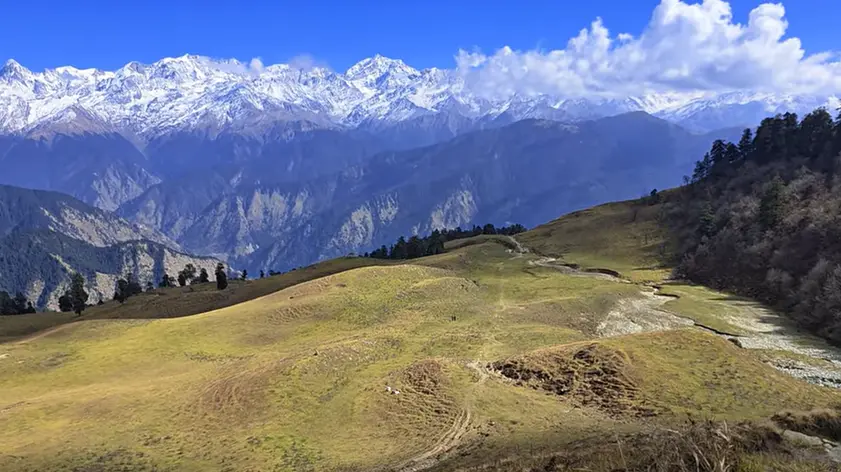
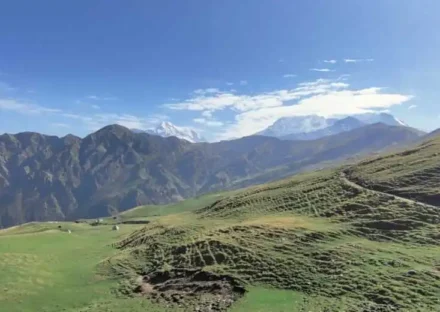
The real party, though, is higher up — where the trail finally clears the trees and opens into the wide, rolling grassland that gives Dayara Bugyal its name. A bugyal is simply an alpine meadow, and Dayara is one of the largest and most famous in the Garhwal Himalayas: a green ocean folded between forested slopes, with the high peaks standing guard along its edges.
In dry weather, this meadow is calm and postcard-pretty. In the rain, it turns into theatre. Every blade of grass holds a tiny bead of water catching whatever light slips through the clouds. Wildflowers that seem to bloom just for the monsoon — small, bright, almost stubborn against the grey sky — nod under each fresh shower. Mist rolls across the grassland in slow waves, sometimes thick enough to hide the next ridge entirely, sometimes thin enough that Srikanth or Draupadi Ka Danda flicker in and out like they’re playing hide and seek, just for you.
There’s a sound to it too, though “sound” isn’t quite the right word. It’s closer to a hush — broken only by rain on grass, the far-off rumble of thunder rolling between peaks, and wind moving through open space with nothing to stop it. Standing in the middle of that meadow, soaked to the knees and grinning anyway, you start to understand why old Garhwali folklore treats these high meadows as places where mountain spirits gather. On a rain day, you wouldn’t need much convincing.
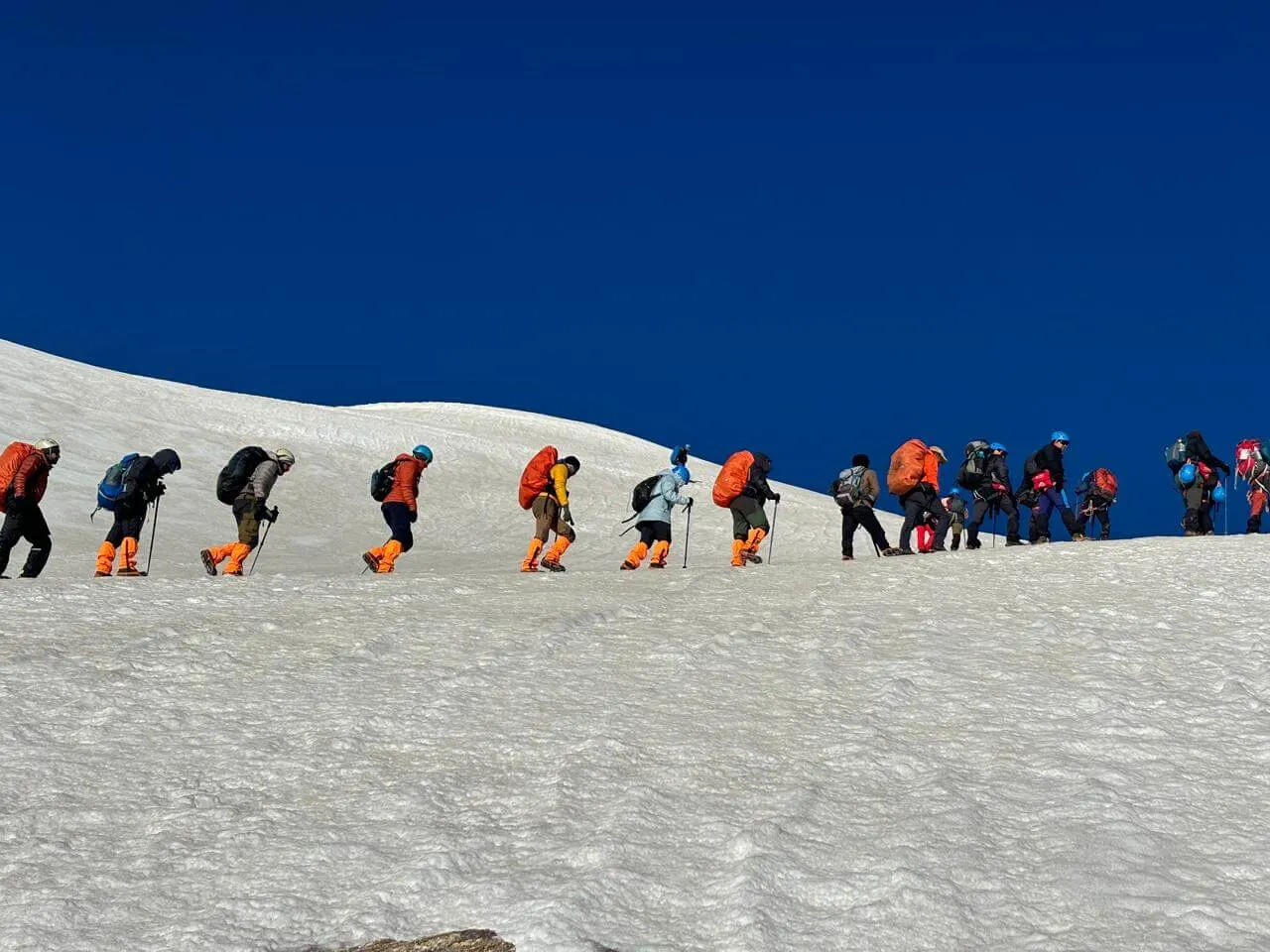
What makes all of this so accessible rather than daunting is that the Dayara Bugyal trek for beginners is truly one of the most accessible introductions to Himalayan trekking anywhere in Garhwal. Mountain Hikers offer this Dayara Bugyal trek package over four laid-back days, walking approximately 20 to 24 km on the round trip on a relaxed gradient that favors good, consistent walking rather than rapid movement. Upon request you can be picked up from Dehradun, Rishikesh or Haridwar and the entire route is based out of Raithal village and the Gui campsite with the provision of accommodation, vegetarian food, transport and an experienced trek leader included in the price.
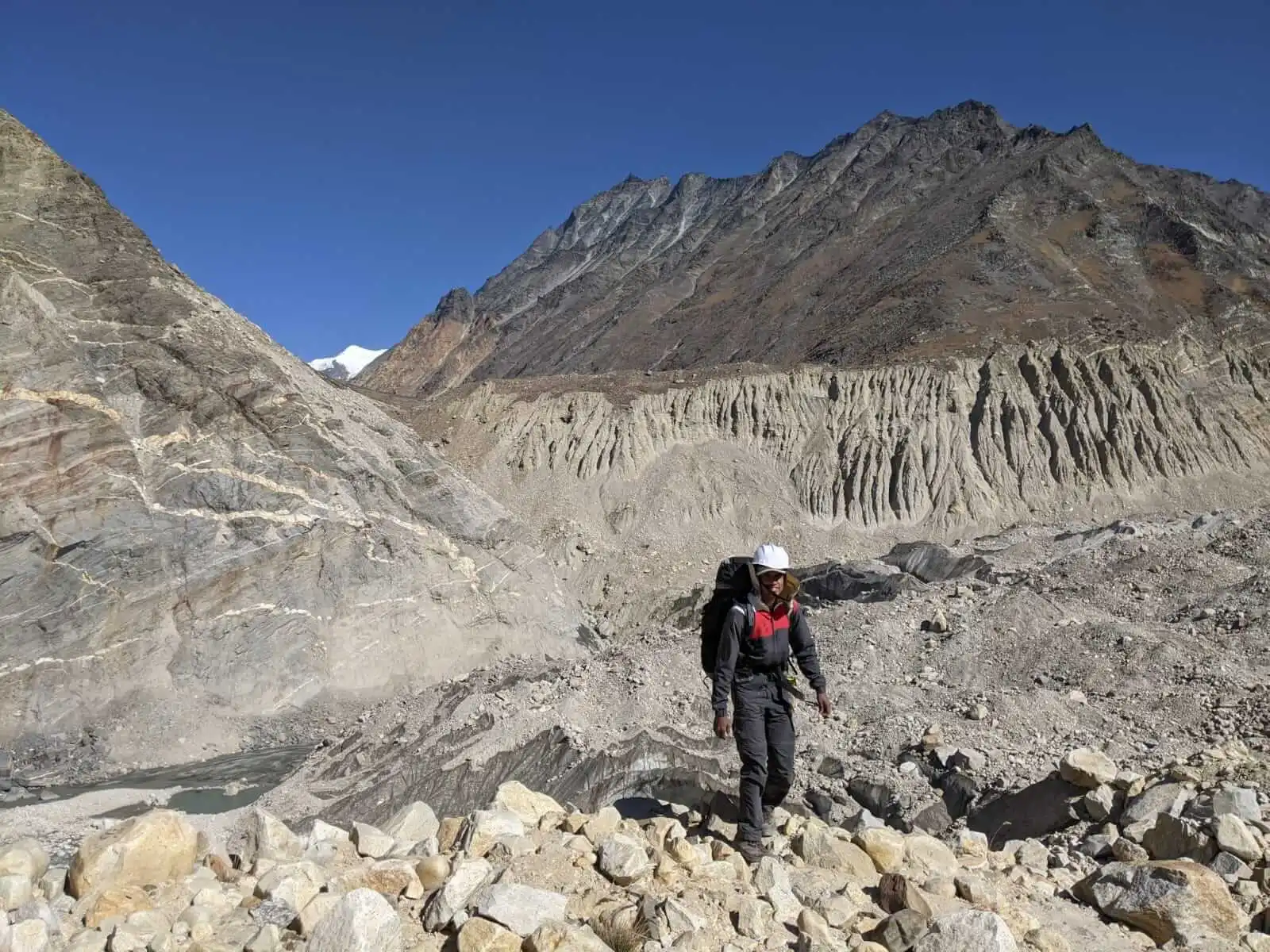
It’s the sort of trail on which eight-year-olds and fairly fit, elderly grandparents have not only reached the meadow, but managed to return alive, and quite likely to have a tale or two to tell-something to do with the trail remaining unfailingly lenient, even when the Skies sit on their hands and throw a tantrum for an hour or two. The elevation reaches to a maximum of around 11,830 ft, providing a spectacular view of some thoroughly considerable Himalayan monsters such as Bandarpoonch, Kalanag (Black Peak), Srikanth, and Draupadi Ka Danda, but just low enough for Acute Mountain Sickness to be a non-issue.
As for a monsoon trek to Dayara Bugyal, be prepared: genuine rain cover for pack, a good rain coat and muddy shoes that don’t sabotage the rest of the day. There’s nothing to complain about, on the contrary, allone has to do is sit back and enjoy the show.
What about the Dayara Bugyal trek in the rains? It can be just fantastic if you’re open to a little sways of fortune. The meadow is a lush green remember and the clouds put on a glorious show at Gui while the numbers thins down dramatically. Well, the trails tend to get a little mucky, so it’s your shoes that need to do the talking.
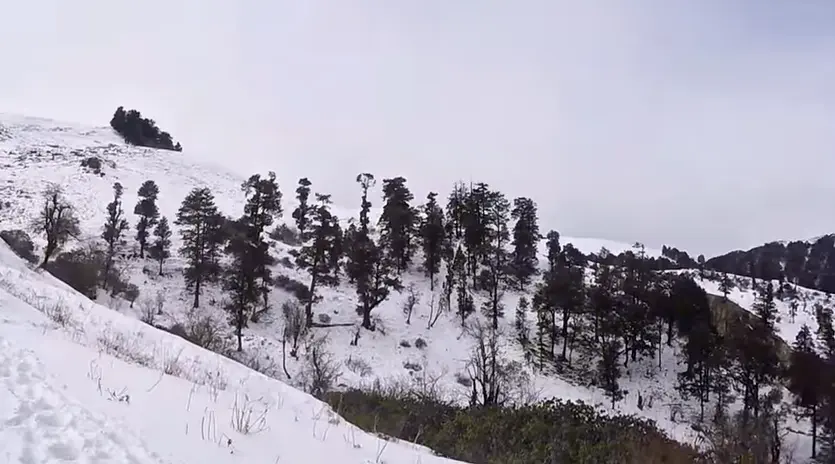
What is the best season to do the Dayara Bugyal trek of all? It all depends on what you are seeking. If snow and a wintery feel is your priority then December to February will be optimum.
May & June will see dense greenery shrouded with flowers.
Between September and November is the period when the skies are clear and the mountain views are at their magnificent best.
What is the level of difficulty of the Dayara Bugyal trek for first timers? It is an easy – moderate trek with approximately 1380 meters elevation gain in four days so it’s no doubt that this is one of the top first hikes on the Himalaya.
Can children or seniors join the Dayara Bugyal trek? Yes — it’s considered one of the better starter treks in Uttarakhand for children above eight and for physically fit seniors, thanks to the manageable distance and gradual altitude gain.
What should I pack for a Dayara Bugyal trek in the rainy season? A waterproof backpack cover, a proper rain jacket, quick-dry layers, and trekking shoes with decent grip will do most of the work. The trek package covers stays, meals, guide, and camping gear — rain gear and personal footwear are the one thing worth sorting out yourself.
There’s an age-old maxim that places only reveal their real personality when everything isn’t ideal. Dayara Bugyal, perhaps more than most, seems to exist in constant confirmation of that maxim. The same pasture that is cultivated and idyllicic on a bright blue day becomes ferociously primal, desperately moody, misty and somehow more truthful in being way-back-in-the-depths-of-real-mountains rather than on a postcard.
Trekkers who’ve ascended to Dayara in a downpour keep echoing the same sentiment for hours thereafter: the rain didn’t spoil the trek; it added to the memories. There’s something about witnessing clouds march across a camp, about listening to rain patter on a meadow, rather than on a tent’s roof, about having a cuppa in a tent, when somewhere over Uttarkashi, thunder rumbles-something that cannot happen on a dry, in-control day.
So if the forecast is looking grey for the Dayara Bugyal trek, don’t be disheartened. You’re not being given bad weather. You’re being given an invitation to a party that Mother Nature throws only a handful of times a season-and that very few other places in the Himalayas can host as elegantly as Dayara Bugyal.
©2026 Mountain Hikers I All Rights Reserved