Basic Info
-
Approx. 13,800 ft
-
Moderate-Hard
-
Kashmir
-
Srinagar
-
72 km
-
Sonamarg
-
Camps / Homestays
-
Srinagar
-
Veg Meals (Breakfast, Lunch, Dinner)
-
July-Sep (Only)
-
Included
Kashmir Great Lakes Trek | Most beautiful trek of India
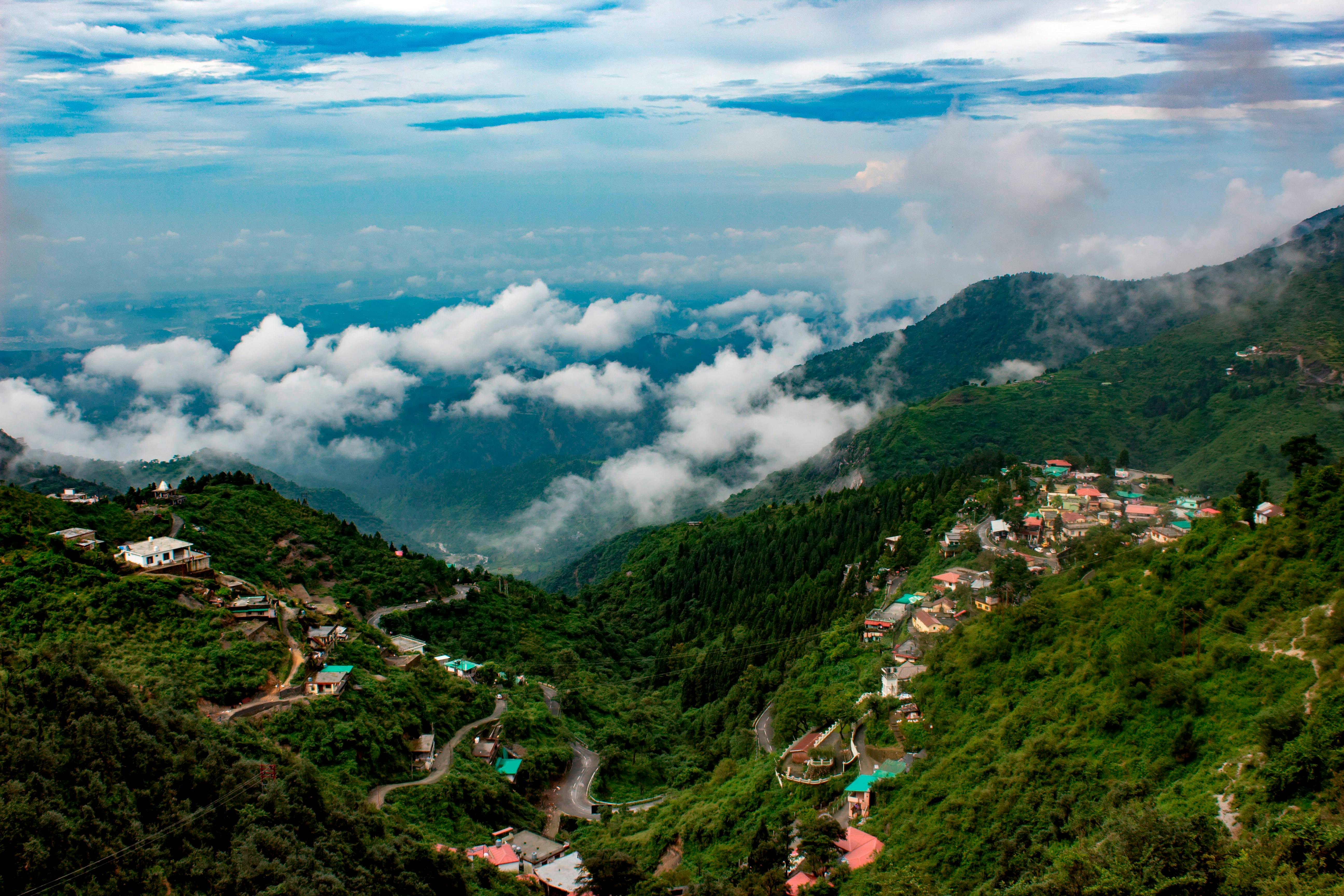
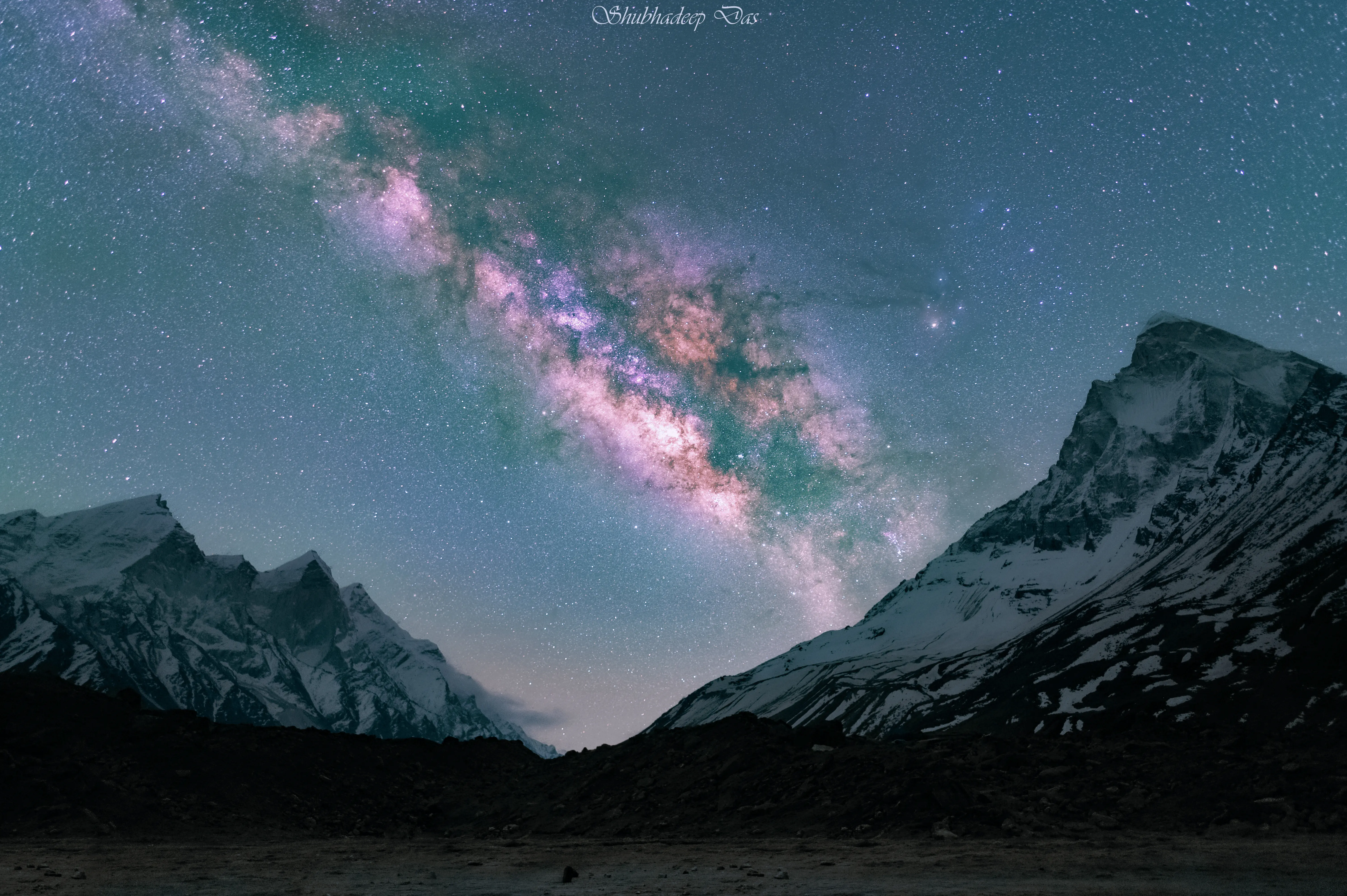
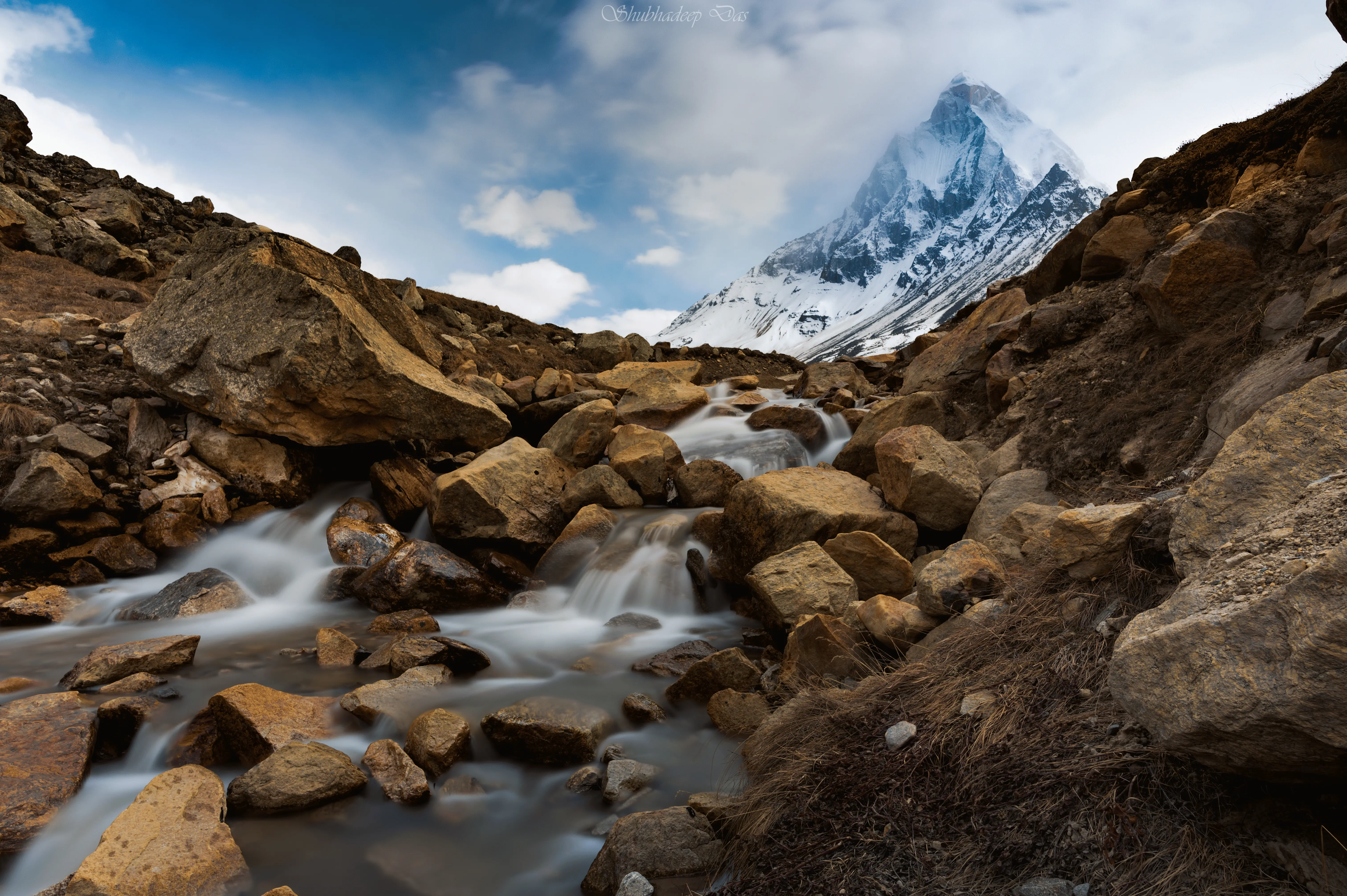
The Kashmir Great Lakes Trek is one of the most scenic high altitude treks in India. Located in the beautiful region of Kashmir, in Jammu and Kashmir, this trek is known for its crystal clear alpine lakes, vast green meadows, snow-covered mountains, and dramatic mountain passes.
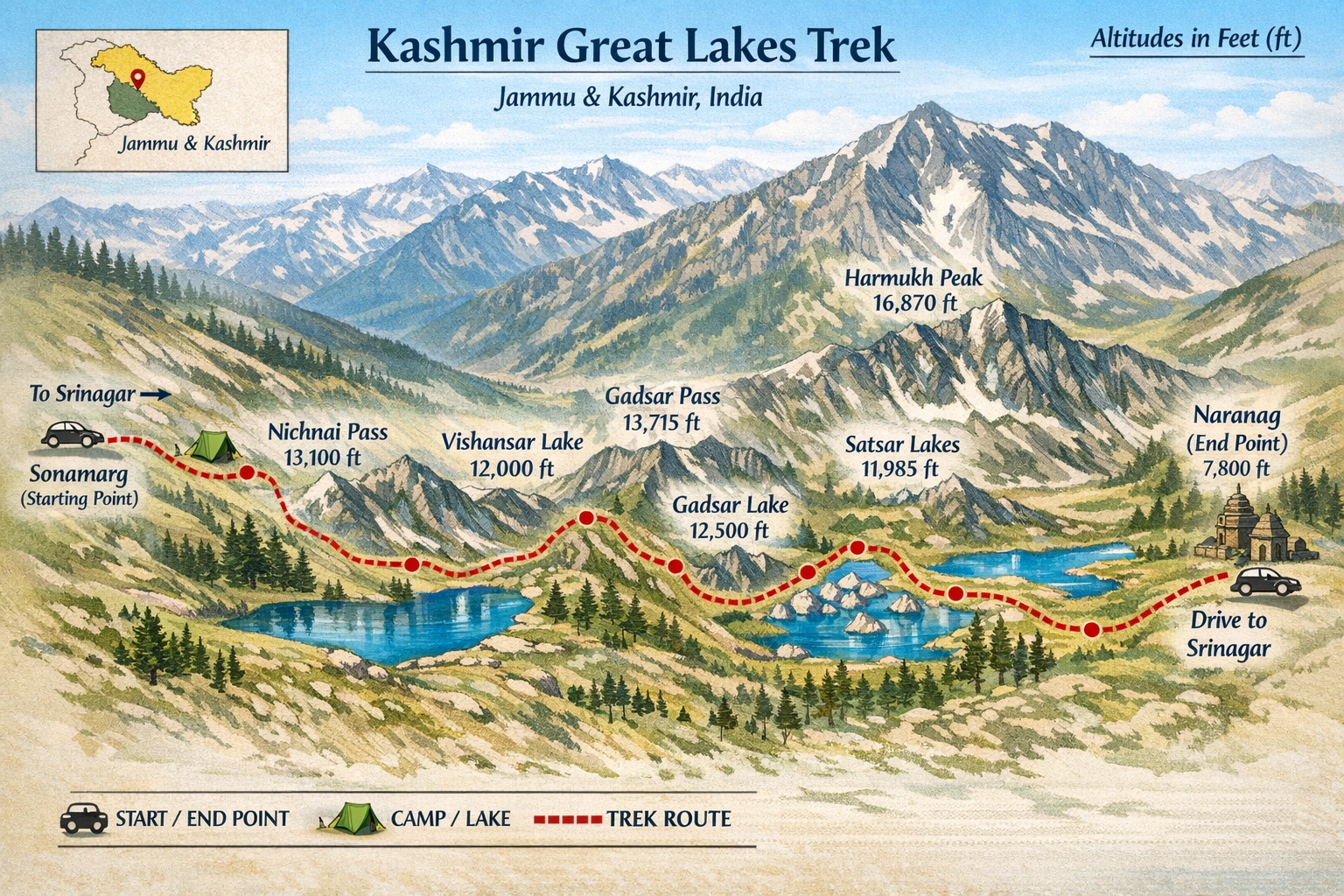
The trek usually begins from Sonamarg and ends at Naranag, with road connectivity from Srinagar. Over 7 days, trekkers cover around 70 to 75 kilometers, crossing high altitude passes above 13,000 feet.
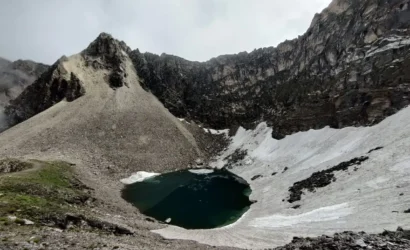
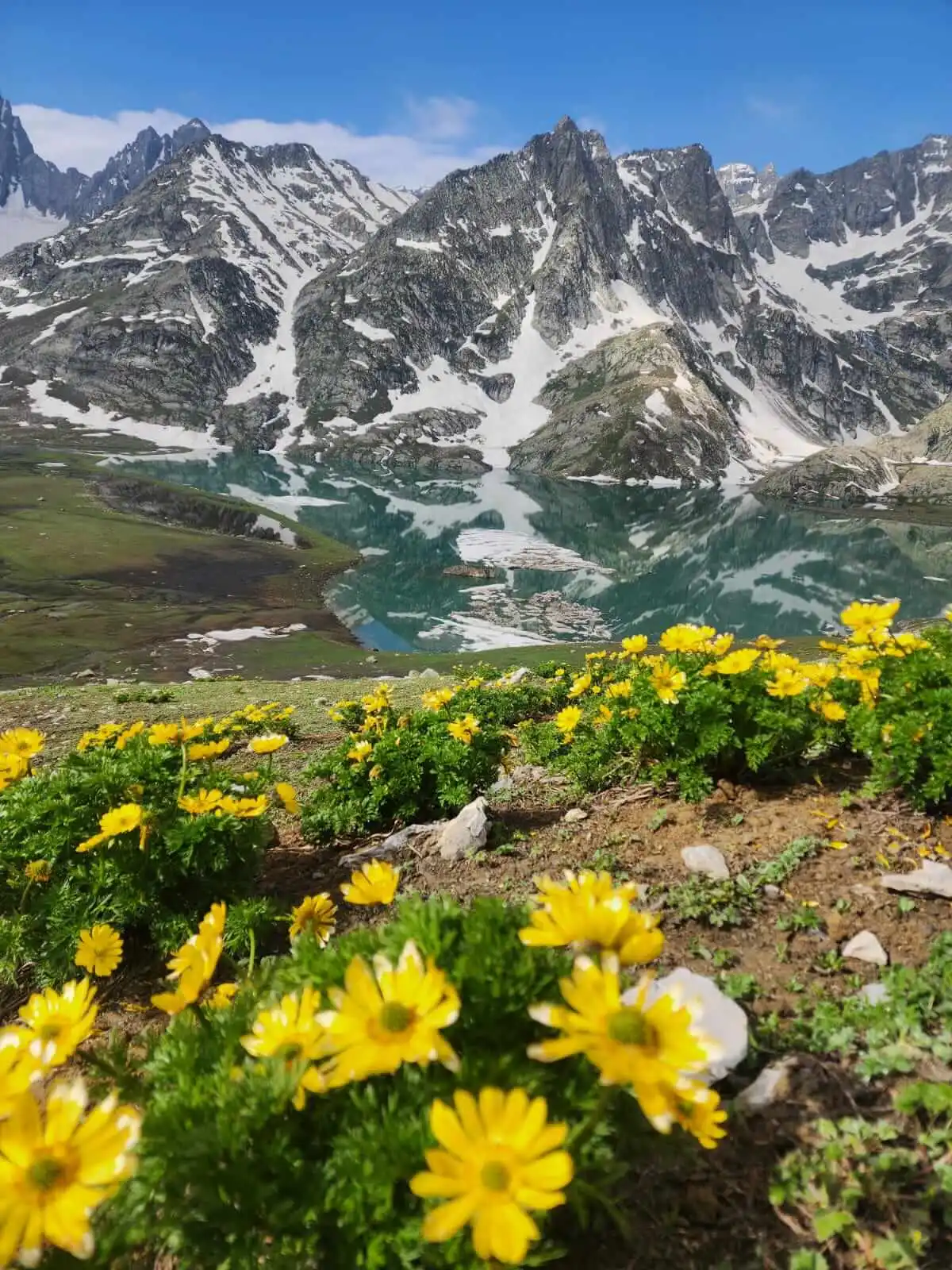
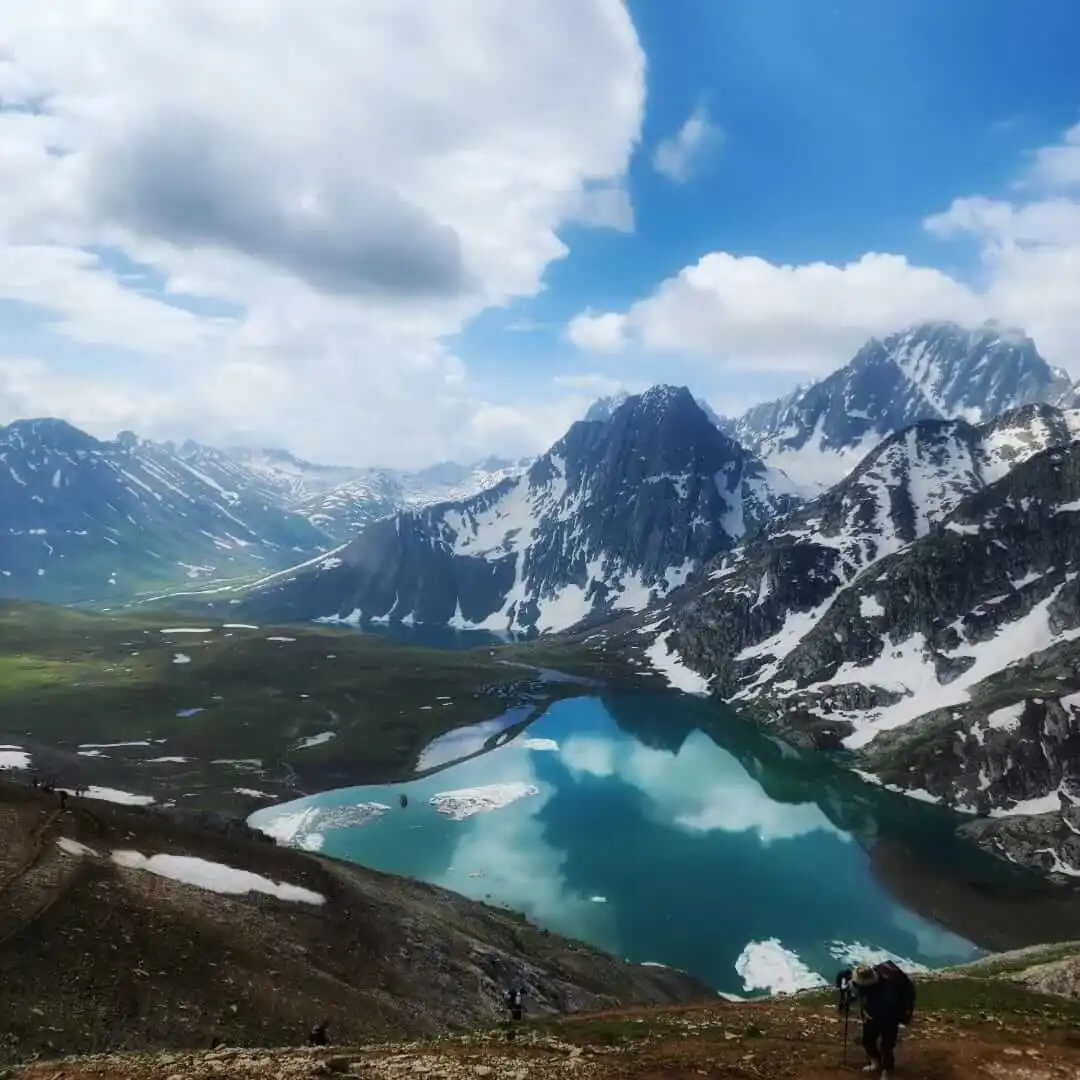
This Himalayan lake trek takes you to some of the most stunning alpine lakes in India, including Vishansar Lake, Krishansar Lake, Gadsar Lake, Satsar Lakes, Gangabal Lake, and Nundkol Lake. Each lake has its own beauty, with changing colors, reflections of snow peaks, and peaceful surroundings.
The best time to do the Kashmir Great Lakes Trek is from July to September, when the meadows are filled with wildflowers and the weather is stable. The trek is graded moderate to difficult, making it ideal for fit beginners and experienced trekkers looking for a complete Himalayan trekking experience.
If you’re searching for one of the most beautiful treks in India, the Kashmir Great Lakes trek should be at the top of your list. It truly lives up to the legendary image of Kashmir as “heaven on earth.” The views along this trek feel like something out of a dream. Vast, breathtaking, and unforgettable. Located near Srinagar, this trek is known for the stunning lakes you’ll come across along the way, each one more beautiful than the last.
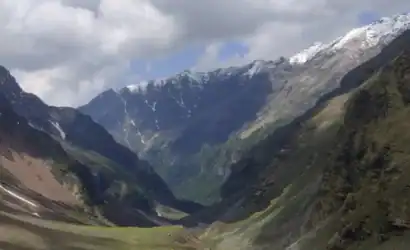
During this trek, you’ll get to experience the most amazing 360-degree views of rolling hills, peaceful meadows, crystal-clear lakes, snow-covered peaks, and stunning river valleys. The entire trip will take you through six stunning lakes and five breathtaking valleys nestled in the heart of Kashmir. Regarding logistics, the trek takes approximately six days to complete and is considered moderate to difficult. The high altitude can be tough, especially for beginners, so it’s important to be well-prepared.
During this trip, you’ll discover some of the most beautiful yet untold stories about Kashmir, its lakes, and many other less-explored places. One such place is the ancient Naranag Temple. Built by King Lalitaditya Muktapida, it is believed to be dedicated to Lord Shiva. Many carvings and a Shiva lingam have been found here. Some also believe the temple honors the divine snakes (nagas) of Hindu mythology. In ancient times, the Nagas were worshipped in the region, particularly around the Kashmir Great Lakes, and this was a significant aspect of the region’s culture. Today, though in ruins, it remains a stunning archaeological site.
The other one is the Harmukh Mountain, standing at about 16,000 ft, which is believed to be the home of Lord Shiva according to local mythology. A saint once tried to climb it to meet Shiva. Though he couldn’t reach the top even after 12 months, he attained nirvana and disappeared. Then there is Trout, the only living creature found in the lifeless waters of Krishansar and Vishansar lakes.
These two high-altitude lakes are closely connected, with the same water flowing through both. Vishansar is known as the “home of Lord Vishnu,” while Krishansar is referred to as “the lake of Krishna.” Interestingly, no algae grows in these lakes, which is why no other aquatic life thrives there. On the other hand, Gadsar Lake often appears green because of the algae that grows in it. Fishing, especially for trout, has become one of the most popular adventure activities for tourists exploring these beautiful Himalayan lakes.
Know before you go
- Participants should be aware that the trek is challenging, with few easy exits along the trail.
- This trek needs good physical fitness. Try jogging 5 km in under 40 minutes. Work on your stamina, leg strength, and flexibility. Also, spend a day in Sonamarg to help your body adjust to the altitude.
- Watch out for altitude sickness. Please let your trek leader know if you feel dizzy, have a headache, or are feeling unwell.
- Please refrain from carrying extra luggage, as there are no cloakrooms available.
- If, for any reason, the participant chooses not to take the trip, they will not be eligible for a refund.
- If the participant participates in any activity during the trip for any reason of their own choice, they will not be eligible for a refund.
- Suppose operational restraints due to weather conditions or any other reason cause the trip to be altered or canceled in real-time. In that case, the additional cost resulting from such out-of-control changes will not be reflected in package costs.
- We offer an eco-friendly experience to our customers, ensuring that we do not harm the natural balance of the trek. Littering or wasting water will not be treated kindly. Also, avoid using plastic bags wherever possible.
- Carrying dry or packed snacks on the trip is advisable rather than spending money on shops, as they can be expensive. It will help keep the trip’s expenses to a minimum.
- Respect local customs and adhere to the laws, like dressing appropriately when visiting temples or smoking only in designated areas.
- Any damage to the hotel’s property or otherwise will not be covered under the package and will be charged at actual costs.
- Always carry a valid ID with you.
- While the trek leader and our team will ensure we stay within the time limits communicated, delays may occur due to real-time weather conditions. Therefore, it’s better to prepare for an extra day in advance.
- Due to a lack of phone towers, connectivity issues may occur during the trek. It is better to communicate with family and loved ones before the trek, informing them of the itinerary.
- The temperature at higher altitudes is significantly different and can be challenging to manage, so it is advisable to prepare for it in advance.
- Though basic medication and emergency kits will be available on the trek, carrying your kit is also advisable.
- If you are taking any specific medication, always carry it and communicate with your trek leaders and fellow participants on how to respond in an emergency.
- The trek will be conducted in accordance with state government guidelines. Participants are advised to follow these guidelines, as any violation will result in strict action, including the discontinuation of participation.
- Using earphones during the trek is not advisable, as they might hinder your hearing ability.
- Participants must carry battery backups if they wish to use other electronics, as electricity will be available only at a limited number of locations.
- The activity intends to connect with nature and is free of modern luxuries. Participants are advised to come prepared for a more natural experience.
- If participants feel uncomfortable during the activity, they may return to the base camp. However, the participant will bear all expenses associated with returning to the camp.
- The guide holds the right to send a participant back to the camp if
- The participant is not fit to continue further due to health issues.
- Their turnaround time is not ideal.
- They were found smoking, drinking, or breaking any other rule of the trek.
Things to carry
- Water bottle
- Backpack
- Comfortable clothes
- Socks
- Medical kit
- ID Proof
- Sunscreen
- Power bank
- Extra batteries
- Hand gloves
- Lip balm
- Personal medications
- Essential toiletries
- Moisturizer
- Dry Fruits and Chocolates
- Hiking Shoes and a stick
- Raincoat
- UV Protected Sunglasses
- Quick Drying Towel
- Lightweight trekking pants
- Charger
- Led torch.
How to reach ?
By Air
The easiest way is to fly to Srinagar, which has its international airport and is well-connected to major cities in India. From the airport, you can hire a private cab or take a shared taxi to Sonamarg. The drive is approximately 120 km and takes 3 to 4 hours, passing through scenic mountain roads.
By Road
If you’re already in Srinagar, getting to Sonamarg is simple. Taxis and shared cabs are easily available. The roads are in decent condition, and the views along the way are incredible. From Jammu, the road journey is much longer. It takes around 10 to 12 hours by cab, bus, or private car to reach Sonamarg.
By Train
There’s no railway station directly in Sonamarg. The nearest major station is in Jammu, about 360 km away. Another option is Udhampur railway station, which is closer (260 km), but not connected to many cities. Once you arrive in either Jammu or Udhampur, you’ll need to continue the rest of the journey by road.
Highlights of Kashmir Great Lakes Trek
- Seven Stunning Alpine Lakes: The biggest highlight of the Kashmir Great Lakes Trek is the chance to see multiple high altitude alpine lakes in one journey. Trekkers visit famous lakes like Vishansar Lake, Krishansar Lake, Gadsar Lake, Satsar Lakes, Gangabal Lake, and Nundkol Lake. These crystal clear Himalayan lakes are surrounded by snow-covered peaks and wide green valleys. Each lake has a different color and charm, making this trek one of the best alpine lake treks in India.
- Breathtaking Views of Kashmir Himalayas: This high altitude trek offers wide views of the majestic mountains of Kashmir in Jammu and Kashmir. From high mountain passes to deep valleys, every section of the trail gives stunning Himalayan views. The sight of Mount Harmukh rising above Gangabal Lake is one of the most scenic moments of the entire Kashmir trekking experience.
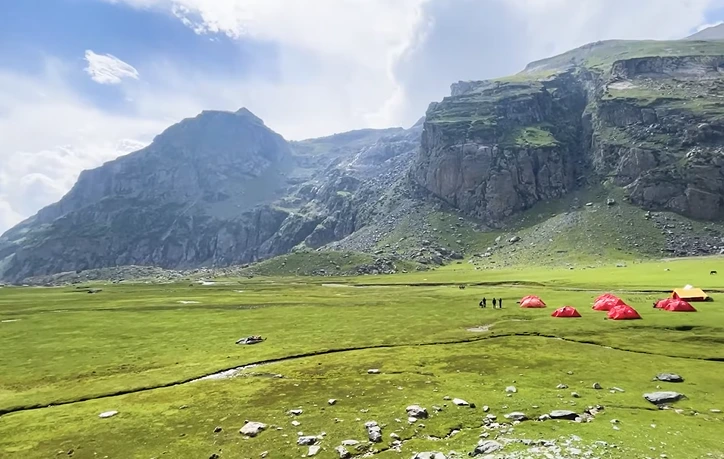
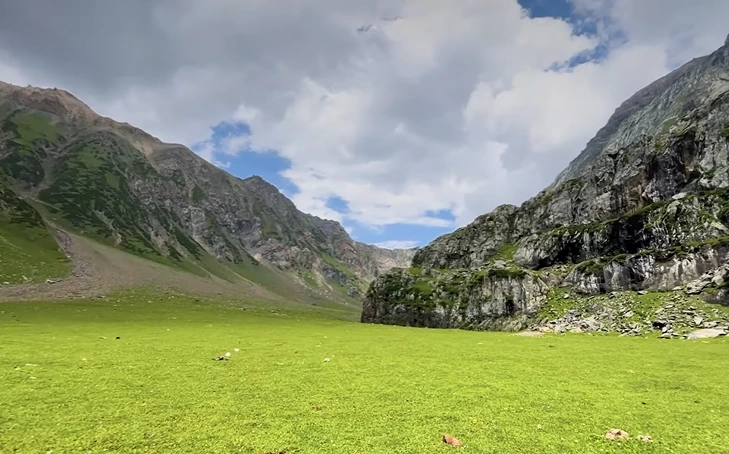
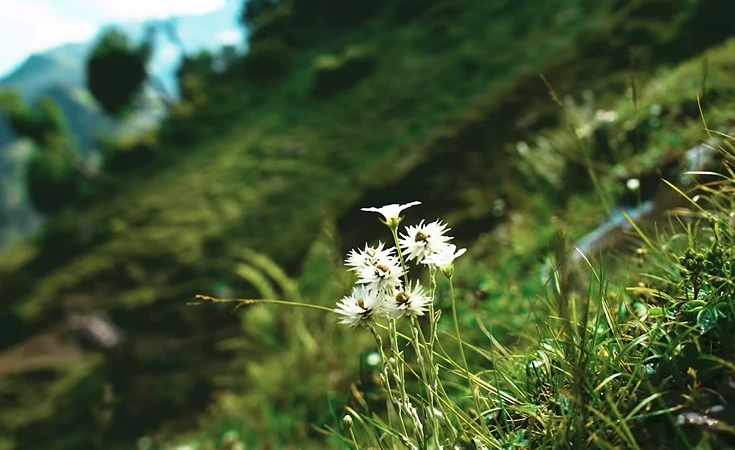
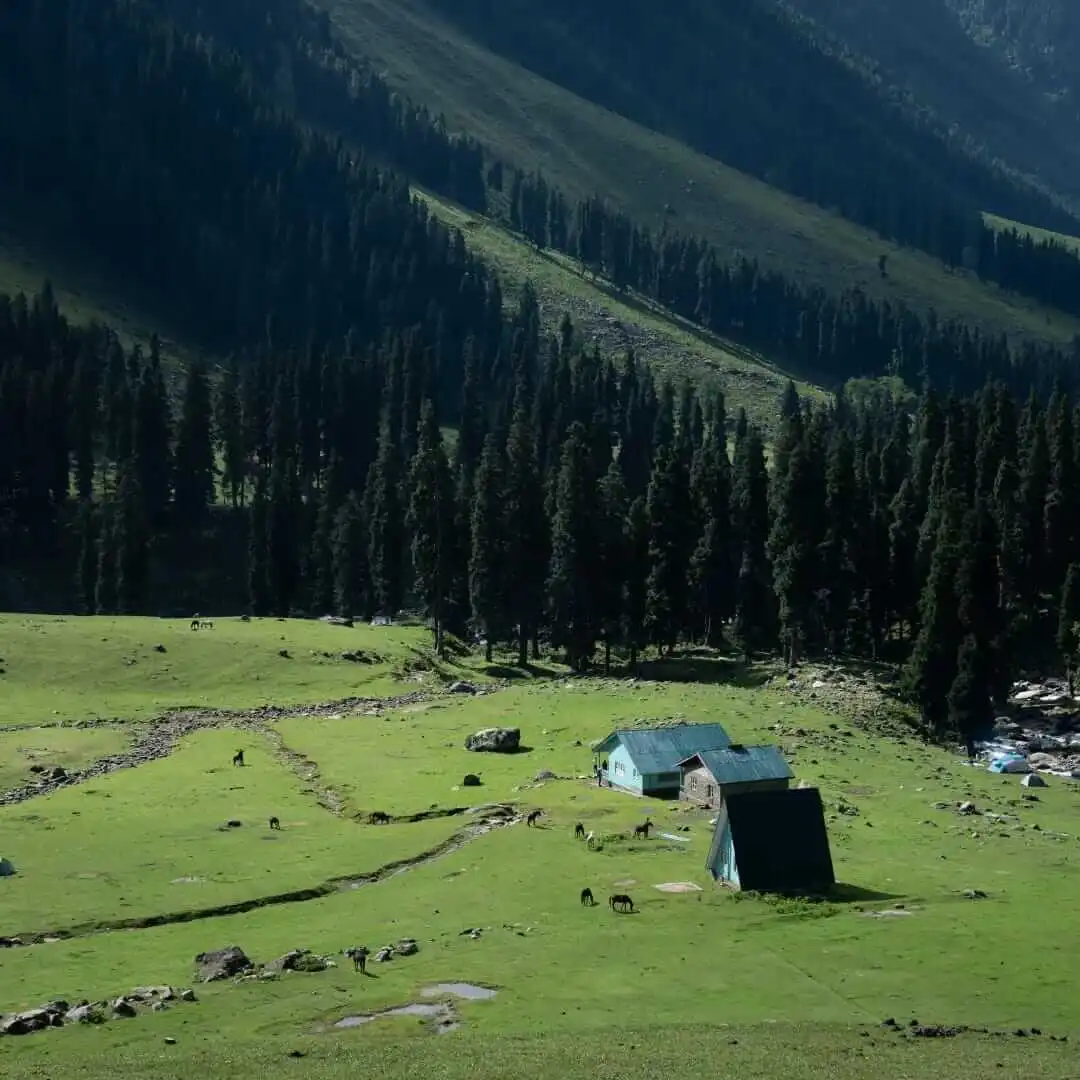
- Lush Green Meadows and Wildflowers: During the trekking season from July to September, the meadows are filled with fresh grass and colorful wildflowers. The open grasslands stretch across the mountains, creating postcard-like views. This makes it one of the most beautiful monsoon treks in India and a top choice for nature lovers.
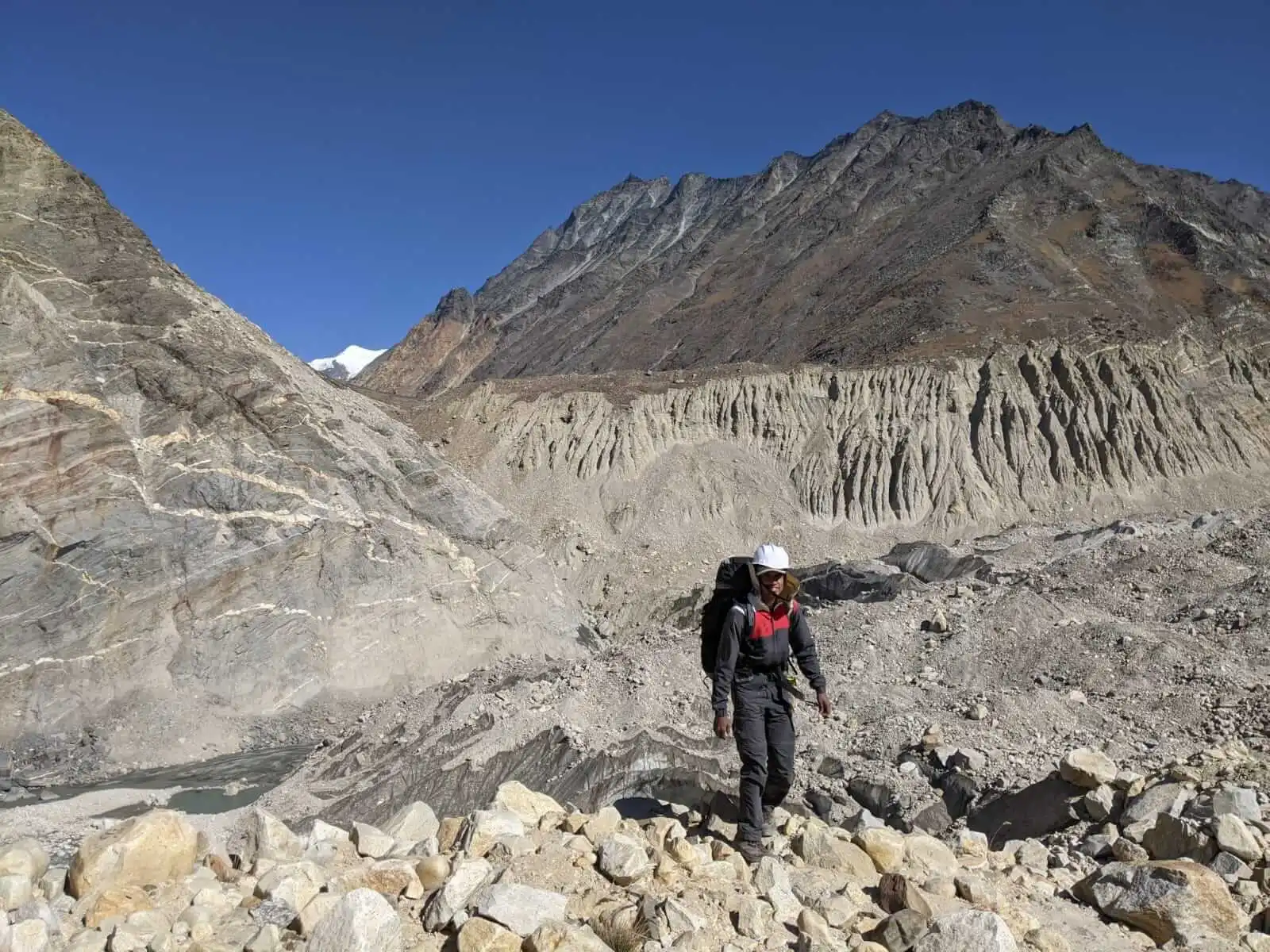
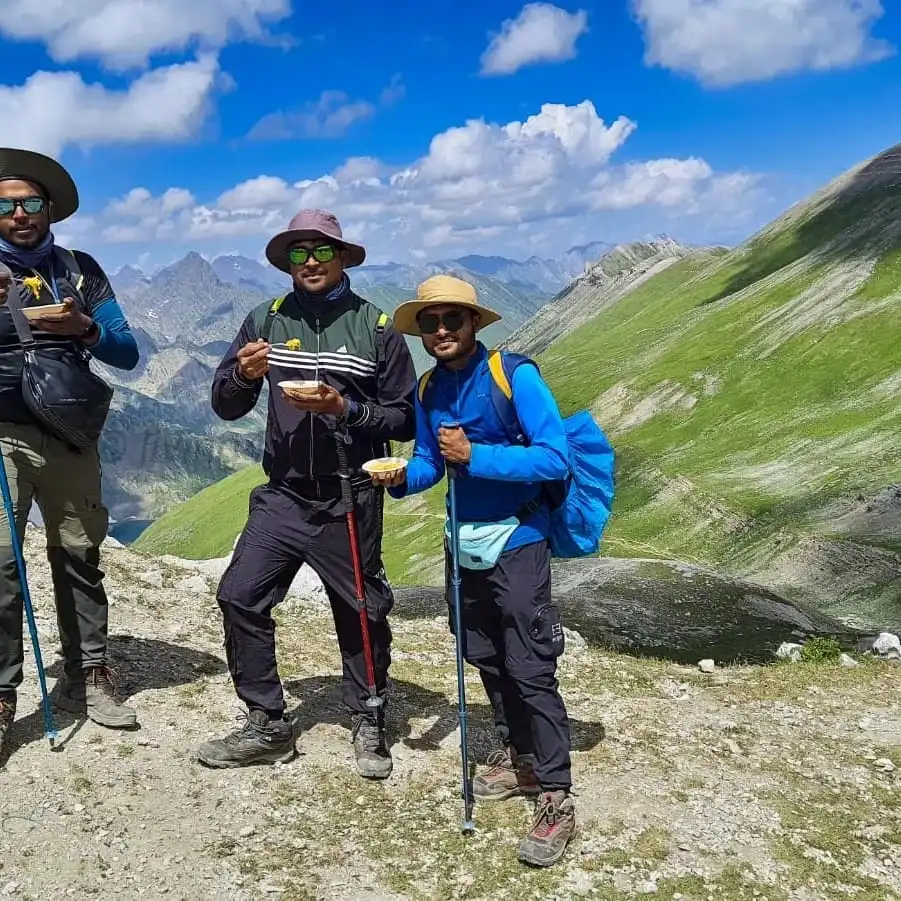
- High Altitude Mountain Pass Experience: The trek crosses challenging high altitude passes above 13,000 feet, including the famous Gadsar Pass. From the top, trekkers can see snowfields, alpine lakes, and endless mountain ranges. This adds adventure and excitement to the Kashmir Great Lakes Trek itinerary.
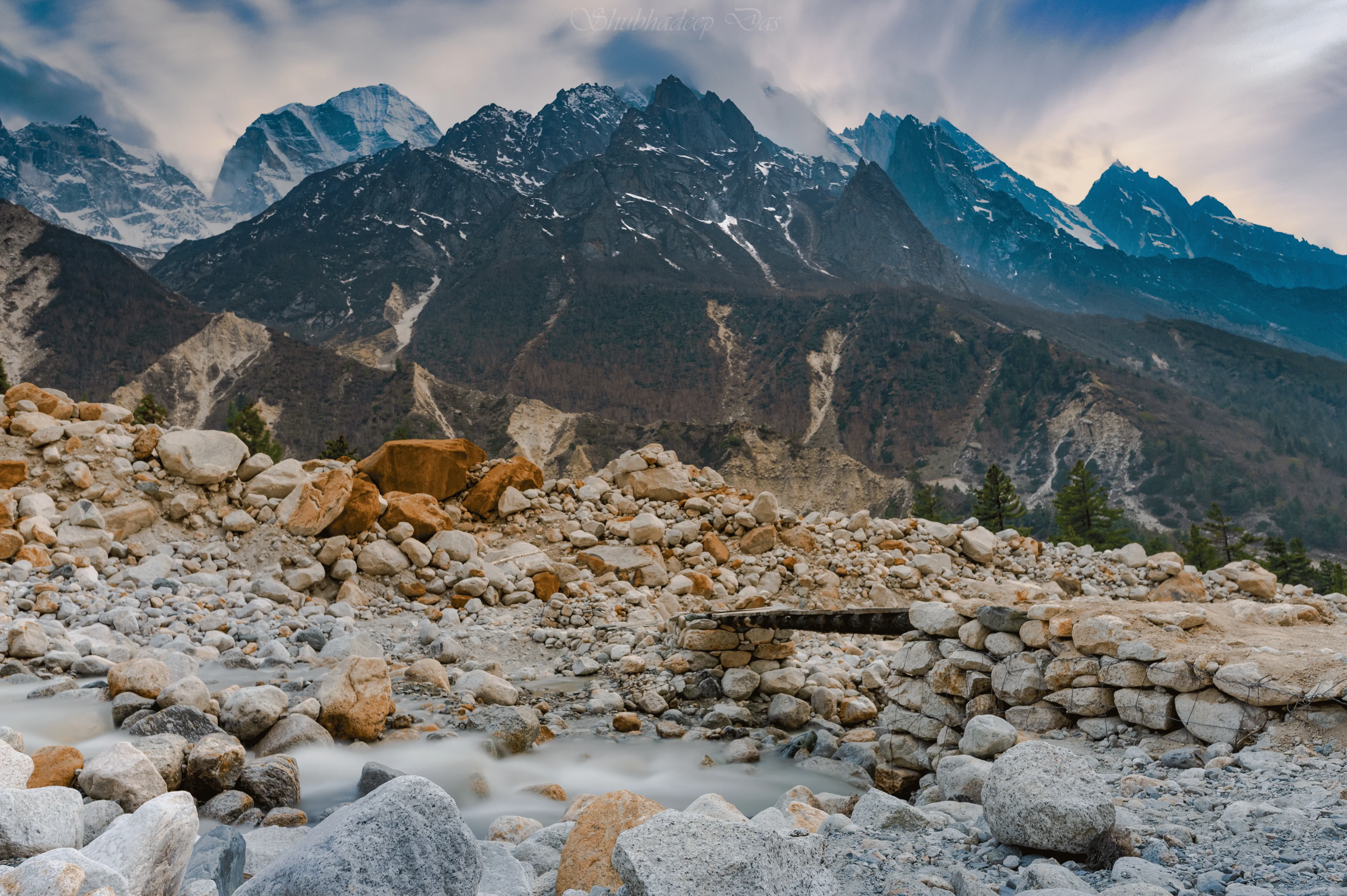
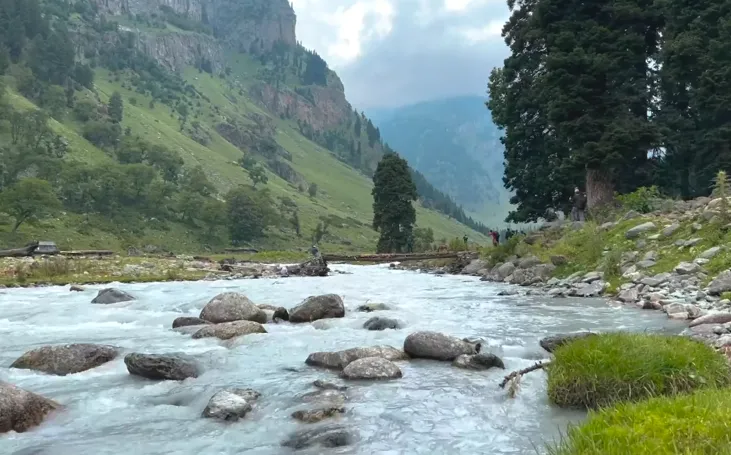
- Changing Landscapes Everyday: One of the best parts of this 7 day Himalayan trek is the variety of scenery. You walk through pine forests, cross flowing streams, climb rocky trails, and camp beside peaceful lakes. The landscape keeps changing everyday, which makes this one of the most scenic treks in India.
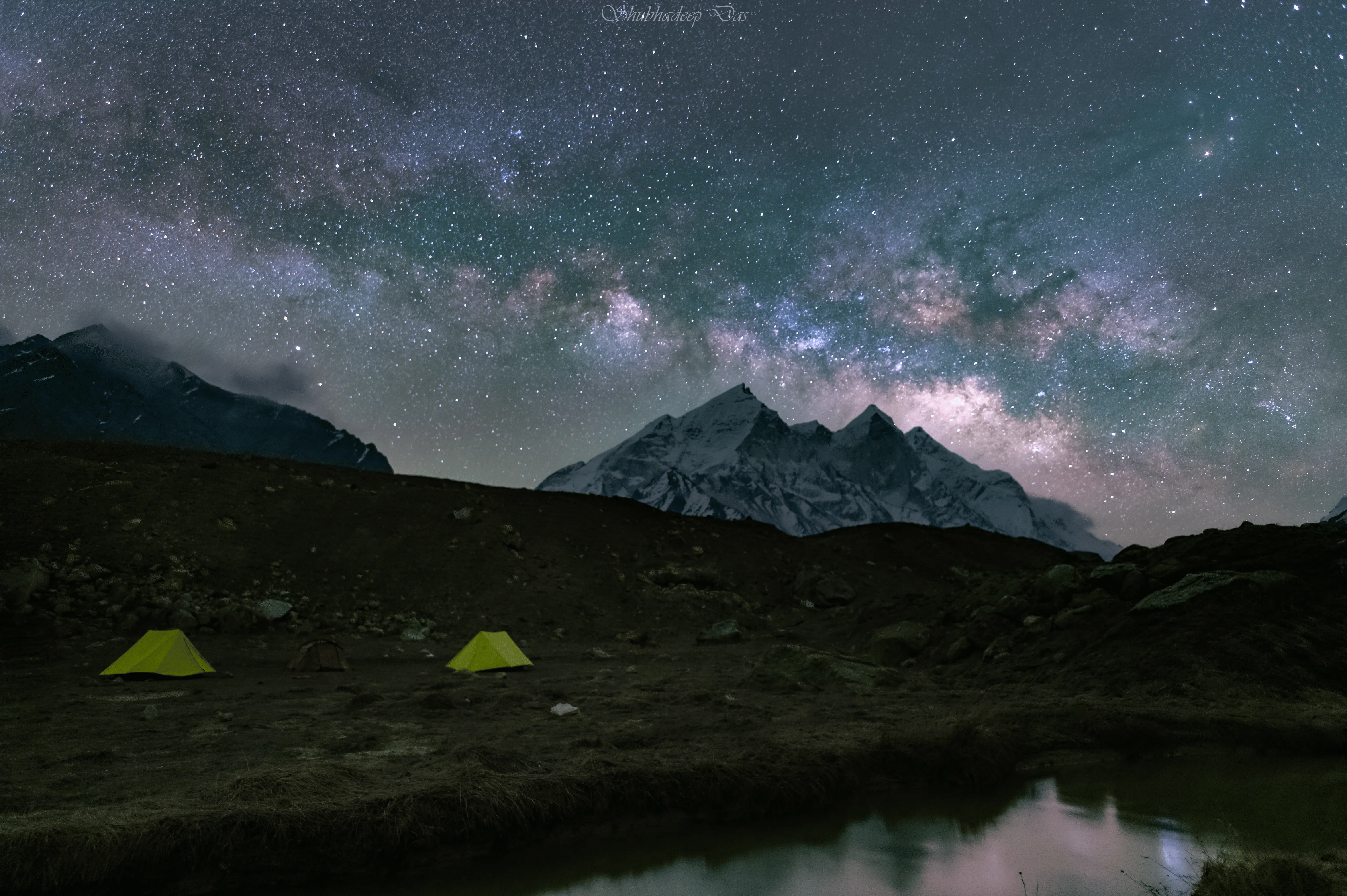
- Peaceful Camping by Himalayan Lakes: Camping near alpine lakes under a sky full of stars is a special part of this trek. Away from city noise, you enjoy fresh mountain air and pure natural beauty. It is a perfect choice for those searching for a peaceful high altitude trekking experience in Kashmir.
- The 7-day Great Lakes trek through Kashmir, often referred to as "Paradise on Earth," offers breathtaking views, peaceful trails, and a memorable adventure through some of India's most scenic landscapes.
- Spend your nights camping under the stars, surrounded by maple trees and beside crystal-clear lakes that beautifully reflect the sky and towering mountains of the Kashmir valley.
- Walk through serene blue lakes, flowing mountain streams, lush green meadows, and cross high-altitude mountain passes, each step offering a new and stunning view of nature’s beauty.
- Pass through six famous lakes of the range and five valleys, as you cover 75 km on foot over a span of six days.
- Explore the untold stories of the valley in places like the Naranag temple, the algae-free Krishansar and Vishansar lakes, and its only living inhabitants, the Trout, as well as the home of Shiva, the Harmukh.